S4E7925 July 2021

S4E79: Why Schedule Quality Matters with Martin Murphy

S4E79

S4E79: Why Schedule Quality Matters with Martin Murphy

0:000:00
100%

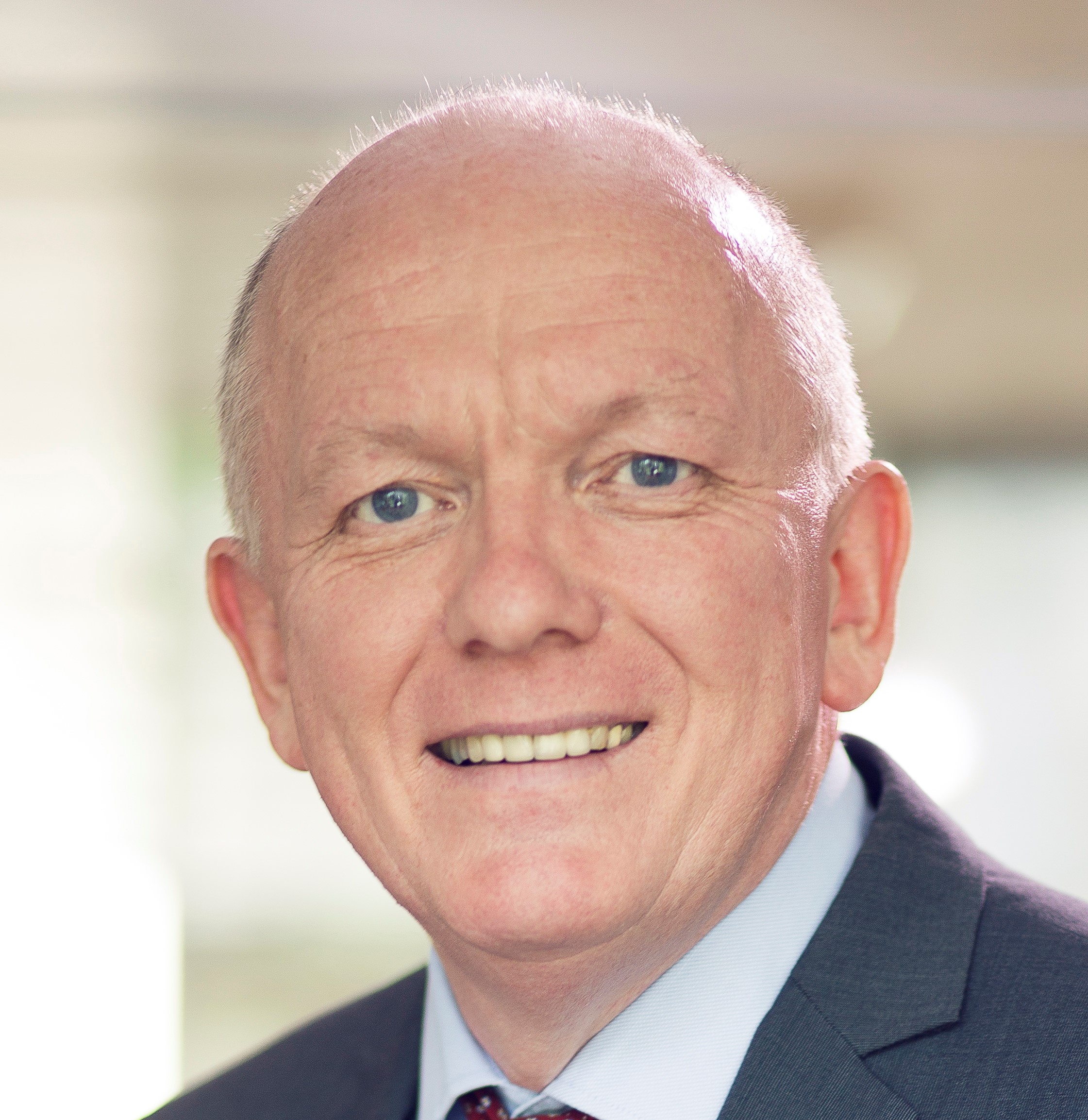
On this week’s pod, we welcomed Martin Murphy to talk about why schedule quality really matters. Martin Murphy has more than 31 years of experience working with multinational companies and participating in high profile international projects, such as the Petronas Towers in Malaysia and the Panama Canal extension. He is a Director with Hill International in Spain, dealing especially with industrial, manufacturing and technological projects. Since 1992, he has been working as Project Manager and in the planning and project control departments of Spanish construction and consulting companies dealing with Claims and controlling time, cost and risk elements of projects in Spain, Europe and Latin America.  The main topics we discussed on the podcast were as follows: · Projects should aim to focus as much planning work upfront as possible. This ensures you are not editing the schedule each week  · Good schedules have a 3% chance of finishing on time The main themes for effective schedule quality metrics are: number of predecessor/successor activities, activities with high float (always lack of logic), coding · The concept of contingencies understood within the industry, however, clients will rarely accept having contingencies in schedule submissions · Rolling wave planning is not always the best approach. Particularly on projects with an element of repetition e.g. construction of a multi-storey building · Top tips for avoiding failure in dispute resolutions: The planner should never assume ownership of the schedule. It must be owned by the project manager  Resource loaded schedules can help to identify missing logic. If the histogram goes from horizontal to vertical, there is probably something missing! Here are links to some of the topics that were discussed: XER Toolkit – schedule quality software https://xertoolkit.com/ Synchro - https://www.bentley.com/en/products/brands/synchro -----------------------------------------

Proudly Sponsored by: JustDo.Com InEight.Com PlanAcademy.Com

Guest

Martin Murphy

Martin Murphy

Director at Hill International

Martin Murphy has more than 31 years of experience working with multinational companies and participating in high profile International projects, such as the Petronas Towers in Malaysia and the Panama Canal extension. He has a degree in Building from the University of Ulster in Northern Ireland and is also a PMP. He is a Director with Hill International in Spain, dealing especially with industrial, manufacturing and technological projects. Martin has extensive experience in Claims and Risk Management and in his career has undertaken various roles with responsibility for the planning and cost control aspects of various building, civil and industrial projects worldwide. Since 1992, he has been working as Project Manager and in the planning and project control departments of Spanish construction and consulting companies dealing with Claims and controlling time, cost and risk elements of projects in Spain, Europe and Latin America. Martin has been appointed as Expert on numerous occasions and has also testified. He has been a University and Business School Lecturer and Hill trainer around the world for over twenty years. He is fluent in Spanish.

Connect

Related Episodes

More conversations on similar topics

S3E65

S3E65: Earned Schedule with creator Walter Lipke

In this episode, Dale and Val get into the geek speak, talking about an additional method to your Earned Value Management methodology. What you may not know is there is a time relative method called Earned Schedule. Val and Dale were fortunate to speak with the creator Walter Lipke and get his take on why this is a useful approach coupled with EVM and other methods to improve time adherence on projects.  In this week’s pod, we welcomed Walt Lipke, creator of the Earned Schedule technique used by projects throughout the USA, UK and Australia. Walt has 35 years of experience in the avionics industry. As well as being the creator of Earned Schedule, he has published over ninety articles. In 2017 the Australian Project Governance and Control Symposium honoured Walt by establishing the annual Walt Lipke Project Governance and Control Excellence Award. For more information on how to use Earned Schedule, visit https://www.earnedschedule.com/ During the pod, we discussed the following topics: Earned Schedule (ES) is effectively an extension to Earned Value Management. The most important development in ES is its ability to more accurately determine the completion date for projects that are behind schedule (or will deliver later than planned.) ES uses Earned Value (EV) performance data to generate the time-based information and uses very similar calculations to predict future performance. Earned Schedule can be used to “drill down” to identify where deficiencies or constraints may exist and where future rework may be needed if current performance does not change. EVM has three different curves: Planned Value, Earned Value and Actual Cost. Once the Earned Value information has been established, you can use Earned Schedule to calculate when this should have been achieved. Earned Value needs to be in place in order to generate Earned Schedule data It is possible to derive calculated project end dates using ES. Different confidence levels can be used to support this. ES is still a new concept, it was created in 2002. This can lead to difficulties in embedding this in the project lifecycle as there is resistance to new concepts. Companies such as Project Flight Deck, Scrum Start, Encore Analytics and Project Tracker all have accessible toolsets to help calculate ES. The challenge of this is making it relevant to Project Managers. Many PM’s are familiar with showing progress against milestones and using ES can be seen as complex. Having visual aids to show progress can help in this regard. It is important to have the right level of data in order to use EVM/ES. Where there are major uncertainties in the project lifecycle such as software, it is useful to use EVM/ES in smaller parts of the project to get the right level of information. The most important criteria to the success or failure of EVM is integrity. It is possible to manipulate the data in all directions, therefore it is the role of the PMO to ensure data is transparent and audit-proof. There is a risk of hidden re-work if the schedule data is manipulated to avoid scrutiny. If you would like to read more about Earned Schedule, you can purchase Walt’s book from the following website: click here  This podcast is brought to you by:  JustDo.com InEight.com PlanAcademy.com - save $75 on any course with this link - https://www.planacademy.com/chatter/

Listen Now
S9E205

S9E205: Replicability of the Montreal REM Model with Riccardo Cosentino

In this episode of the Project Chatter podcast, hosts Val and Dale engage with Riccardo Cosentino to explore the unique aspects of the REM project in Canada, a public-private partnership (PPP) model that has garnered attention for its innovative funding and governance structure. Riccardo shares insights into the project's background, the role of the Quebec pension fund as a project sponsor, and the implications of risk management and return calculations. The conversation delves into the importance of early stakeholder involvement, the challenges of public opinion, and the potential for replicating this model in other sectors. Throughout the discussion, the significance of governance, long-term perspectives, and the necessary skill sets for project professionals are emphasized, providing valuable takeaways for listeners interested in infrastructure projects and PPPs. Takeaways The REM project is a unique public-private partnership model. Risk management is crucial in financing infrastructure projects. The obligation to repay investments can shift from taxpayers to private entities. Calculating returns involves considering ridership and land value capture. Contingency planning is integrated into the rate of return. Early involvement of stakeholders leads to better project outcomes. Governance structures can significantly impact project success. Long-term perspectives are essential for managing infrastructure investments. Curiosity and risk-taking are important traits for project professionals. The REM model could be applied to other sectors beyond transportation. Chapters 00:00 Introduction and Guest Background 03:24 Understanding Public-Private Partnerships (PPPs) 06:11 The REM Project Overview 08:56 Funding and Risk Management in the REM Project 11:55 Calculating Returns and Land Value Capture 14:33 Governance and Project Delivery 17:21 Long-Term Perspectives and Lifecycle Management 22:47 Changing Dynamics in Project Management 24:35 Governance and Change Management in Projects 26:38 Replicating Successful Project Models 29:08 Applying the Model Beyond Rail Projects 31:07 Reporting Mechanisms and Governance Structures 33:55 Skill Sets for Successful Project Delivery 35:39 Advice for Aspiring Project Professionals 37:27 Resilience in Today's Project Challenges 39:40 Future of the CDPQ Model and Its Replicability

Listen Now
S8E186

S8E186: Strategic Misrepresentation with Roger Garrini

In this episode, Roger Garrini discusses the concept of strategic misrepresentation in projects. Strategic misrepresentation refers to deliberately and systematically distorting or misstating information for strategic purposes. It often occurs in bids and tenders, where the desire to win the project leads to telling the customer what they want to hear, even if it's not entirely accurate. Strategic misrepresentation can have harmful consequences, such as wasting time and resources, causing budget overruns, and damaging trust. However, there are also instances where strategic misrepresentation can be beneficial, such as boosting confidence and motivation. The line between acceptable and harmful strategic misrepresentation is subjective and depends on the context and consequences. The conversation explores the challenges of strategic misrepresentation in project management and how it affects project outcomes. The guests discuss the reasons behind misrepresentation, such as political pressures and unrealistic expectations. They also explore the role of technology, particularly AI, in improving project delivery and decision-making. The conversation highlights the importance of data integrity and the need for organisations to create a culture of transparency and accountability. The guests suggest several strategies to address strategic misrepresentation, including better project governance, improved training and education, and a focus on ethical behaviour. Roger is a 42 year defence and aerospace, Stated in PMO of major radar project focused on planning ATE and test software against a changing build standard, moved to be PM of same then international bids and investment project including car gadgets and civil aerospace. Moved site and became involved in PM governance and Risk management, thence to ERM and audit finishing as UK IPR manager. Proudly sponsored by Deltek

Listen Now

Enjoyed this episode?

Subscribe to never miss a conversation with project experts