S8E17921 February 2024

S8E179: Valuing the Project Timeline with Ali Mafi

S8E179

S8E179: Valuing the Project Timeline with Ali Mafi

0:000:00
100%

In this episode, Val and Dale interview Ali Maffey about project management and the importance of lean thinking. They discuss the challenges of project planning, the role of technology in project management, and the complexity of project management tools. They also delve into the difference between identifying threats and shortening programs, the flaws of long-term planning, and the benefits of small projects. The conversation concludes with final thoughts and anecdotes from Ali.Takeaways Lean thinking is crucial in project management as it focuses on eliminating waste and improving efficiency. Project planning can be challenging, especially when it comes to long-term planning and forecasting risks in novel projects. Technology plays a significant role in project management, but it can also add complexity and hinder progress if not used effectively. Identifying bottlenecks and addressing them is essential for successful project execution. Improving project management requires a collective effort from all project professionals, and a focus on collaboration and breaking down silos. Ali started on-site as an engineer in Terminal 4 in 1980. I worked my way up to the project management role and, after two projects, decided how projects worked wasn't for me. Nothing seemed to work and I felt that it wasn’t intellectually engaging. It was all chasing sub-contractors and engaging in energy-sapping toxic behaviours such as blaming and defensive reasoning.

Ali left construction to do an MBA and then worked at a large automotive company looking at life cycle cost and productivity. It was during this period that I discovered an environment where things worked. The right colour door arrived at the right colour car every time.

Ali came back to construction and joined Balfour Beatty Civils and Rail major projects. Early on, I was asked, based on my automotive experience and MBA, to join the Business Improvement Team (BIT) which was probably the first of its kind in construction.

The BIT was made up of 5 of the smartest people I have met in construction. We then spent 6 years testing out everything and anything we read or heard about. Ali started with implementing TQM before Lean Thinking. We helped Eli Goldratt with his first trial of Critical Chain. We met Gelen Ballard soon after his Last Planner paper was published. We tested out ideas from Semco and Riccardo Semler, setting up self-managing front-line teams on major projects. In 1999, Ali was seconded to Egan’s M4I (backed by the cabinet office) as an innovation advisor. I helped develop the Construction National KPIs, promote offsite manufacturing, and encourage the use of partnering PPC2000 forms of contract. Ali also set up and ran the first Lean Thinking training workshops in construction. Ali was also responsible for validating the innovations claimed by the 68 Egan complaint demonstration projects and producing the ministerial report for the parliament. In 2004 he helped set up Lean Thinking Ltd and became a member of Buildoffsite. At a later date, he supported the first BIM trial project. Ali has been involved with more than 200 projects and have experimented with more ideas, tools, techniques, initiatives, etc, on more live projects for a longer period than probably anyone else in the industry globally. Proudly Supported by Deltek - ⁠www.deltek.com⁠

Guest

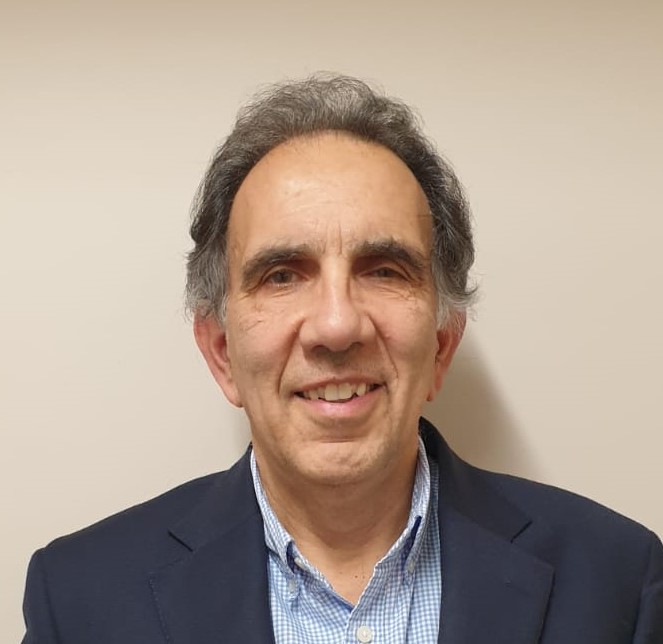
Ali Mafi

Ali Mafi

Managing Director at LTL - Timist™

I started on-site as an engineer in Terminal 4 in 1980. I worked my way up to the project management role and, after two projects, decided how projects worked wasn't for me. Nothing seemed to work and I felt that it wasn’t intellectually engaging. It was all chasing sub-contractors and engaging in energy-sapping toxic behaviours such as blaming and defensive reasoning. I left construction to do an MBA and then worked at a large automotive company looking at life cycle cost and productivity. It was during this period that I discovered an environment where things worked. The right colour door arrived at the right colour car every time. I came back to construction and joined Balfour Beatty Civils and Rail major projects. Early on, I was asked, based on my automotive experience and MBA, to join the Business Improvement Team (BIT) which was probably the first of its kind in construction. The BIT was made up of 5 of the smartest people I have met in construction. We then spent 6 years testing out everything and anything we read or heard about. We started with implementing TQM before Lean Thinking. We helped Eli Goldratt with his first trial of Critical Chain. We met Gelen Ballard soon after his Last Planner paper was published. We tested out ideas from Semco and Riccardo Semler, setting up self-managing front-line teams on major projects. In 1999, I was seconded to Egan’s M4I (backed by the cabinet office) as an innovation advisor. I helped develop the Construction National KPIs, promote offsite manufacturing, and encourage the use of partnering PPC2000 forms of contract. I also set up and ran the first Lean Thinking training workshops in construction. I was also responsible for validating the innovations claimed by the 68 Egan complaint demonstration projects and producing the ministerial report for the parliament. in 2004 i helped set up Lean Thinking Ltd and became a member of Buildoffsite. At a later date, I supported the first BIM trial project. I have been involved with more than 200 projects and have experimented with more ideas, tools, techniques, initiatives, etc, on more live projects for a longer period than probably anyone else in the industry globally. I was invited to join the Productivity Insights Network (PIN) a few years ago. The aim of PIN was to deepen the understanding of the factors influencing UK productivity (all industries). The network involved nine top UK universities. In the last few years, utilising the learning from experimenting with most initiatives, tools and techniques, I have developed the Timist™ project delivery system, which is focused on delivering projects in the shortest time than any other current system. It achieves this by: \- Functions like a sat nav and gives time to completion daily. \- Measures productivity and client value in flight daily. \- Organises work one unit by one unit (number, length, area, volume) and executes continuously rather than based on task times. \- Prioritises work scientifically daily using elapsed time in the order of impact on the end date. \- Doesn’t allow one-to-one meetings by the tier 1 and the subcontractors to discuss progress. \- Deals with the biggest risk on projects the same way as playing Tetris. \- Emulates the hospitals' daily ward rounds system as the best way to improve productivity.

Connect

Related Episodes

More conversations on similar topics

S9E205

S9E205: Replicability of the Montreal REM Model with Riccardo Cosentino

In this episode of the Project Chatter podcast, hosts Val and Dale engage with Riccardo Cosentino to explore the unique aspects of the REM project in Canada, a public-private partnership (PPP) model that has garnered attention for its innovative funding and governance structure. Riccardo shares insights into the project's background, the role of the Quebec pension fund as a project sponsor, and the implications of risk management and return calculations. The conversation delves into the importance of early stakeholder involvement, the challenges of public opinion, and the potential for replicating this model in other sectors. Throughout the discussion, the significance of governance, long-term perspectives, and the necessary skill sets for project professionals are emphasized, providing valuable takeaways for listeners interested in infrastructure projects and PPPs. Takeaways The REM project is a unique public-private partnership model. Risk management is crucial in financing infrastructure projects. The obligation to repay investments can shift from taxpayers to private entities. Calculating returns involves considering ridership and land value capture. Contingency planning is integrated into the rate of return. Early involvement of stakeholders leads to better project outcomes. Governance structures can significantly impact project success. Long-term perspectives are essential for managing infrastructure investments. Curiosity and risk-taking are important traits for project professionals. The REM model could be applied to other sectors beyond transportation. Chapters 00:00 Introduction and Guest Background 03:24 Understanding Public-Private Partnerships (PPPs) 06:11 The REM Project Overview 08:56 Funding and Risk Management in the REM Project 11:55 Calculating Returns and Land Value Capture 14:33 Governance and Project Delivery 17:21 Long-Term Perspectives and Lifecycle Management 22:47 Changing Dynamics in Project Management 24:35 Governance and Change Management in Projects 26:38 Replicating Successful Project Models 29:08 Applying the Model Beyond Rail Projects 31:07 Reporting Mechanisms and Governance Structures 33:55 Skill Sets for Successful Project Delivery 35:39 Advice for Aspiring Project Professionals 37:27 Resilience in Today's Project Challenges 39:40 Future of the CDPQ Model and Its Replicability

Listen Now
S8E186

S8E186: Strategic Misrepresentation with Roger Garrini

In this episode, Roger Garrini discusses the concept of strategic misrepresentation in projects. Strategic misrepresentation refers to deliberately and systematically distorting or misstating information for strategic purposes. It often occurs in bids and tenders, where the desire to win the project leads to telling the customer what they want to hear, even if it's not entirely accurate. Strategic misrepresentation can have harmful consequences, such as wasting time and resources, causing budget overruns, and damaging trust. However, there are also instances where strategic misrepresentation can be beneficial, such as boosting confidence and motivation. The line between acceptable and harmful strategic misrepresentation is subjective and depends on the context and consequences. The conversation explores the challenges of strategic misrepresentation in project management and how it affects project outcomes. The guests discuss the reasons behind misrepresentation, such as political pressures and unrealistic expectations. They also explore the role of technology, particularly AI, in improving project delivery and decision-making. The conversation highlights the importance of data integrity and the need for organisations to create a culture of transparency and accountability. The guests suggest several strategies to address strategic misrepresentation, including better project governance, improved training and education, and a focus on ethical behaviour. Roger is a 42 year defence and aerospace, Stated in PMO of major radar project focused on planning ATE and test software against a changing build standard, moved to be PM of same then international bids and investment project including car gadgets and civil aerospace. Moved site and became involved in PM governance and Risk management, thence to ERM and audit finishing as UK IPR manager. Proudly sponsored by Deltek

Listen Now
S6E150

S6E150: Project Controls in Design & Engineering stages with Paul Waskett

In this week’s pod, we were joined by Paul Waskett to discuss Project Controls in design and engineering stages. Paul is a Director of Adept Management where he takes responsibility for the development of their Project Controls tools and services, as well as supporting clients and projects across the construction industry. Since 2014, Paul has been supporting two major rail projects. He is a Mechanical Engineer by background and has over 20 years’ experience in Design Management and Project Controls. In addition, Paul has spent time working in central government, where he managed a construction innovation budget, and as a researcher where he developed some of Adept Management's innovative approaches to design planning and management.  The main topics we discussed on the podcast were as follows: There is generally more scrutiny on the construction part of a design and build contract however both need equal attention in order to manage projects effectively Design planning is not as linear as other types of programmes. There are generally more interdependencies and iterations of designs Build a WBS and identify relevant activities and inputs before starting the planning process As the project is delivered, the Last Planner System can be used to monitor progress Using % complete to measure design progress can be difficult to implement consistently Working from home has made it more difficult to promote communication and problem solving in major projects as the relevant stakeholders are not collaborating as often as they would in an office based environment Earned Value Management only works when rules of credit are in place and all stakeholders are aware of the limitations of it being the sole measure of progress Digital twin can help engineers to assess the effect of what may seem like a small scale change on a design It is prudent to have a sole interface between engineering and project management in order to deliver a consistent message One of the key challenges for Engineering Managers is to get the “commitment” from the engineering team(s) to deliver to a specified date or budget Here are links to some of the topics we discussed: The Latham Report – Constructing The Team: https://constructingexcellence.org.uk/wp-content/uploads/2014/10/Constructing-the-team-The-Latham-Report.pdf Adept Management: https://www.adeptmanagement.com/ Last Planner System: https://leanconstructionblog.com/What-is-the-Last-Planner-System.html Join us next week when we speak to Tony Welch to discuss five levers for change. For more information, blogs or to support our charities visit www.projectchatterpodcast.com If you'd like to sponsor the podcast get in touch via our website.You can also leave us a voice message via our anchor page and let us know if there's something or someone specific that you would like on the podcast. Proudly sponsored by: https://www.justdo.com/ https://ineight.com/ Stay safe, be disruptive and have fun doing it! #ProjectManagement #Engineering #PMO #ProjectControls #Leadership #Culture

Listen Now

Enjoyed this episode?

Subscribe to never miss a conversation with project experts