S4E7711 July 2021

S4E77: The 4 Moves in the VUCA World of Projects with Debbie Seunarayan

S4E77

S4E77: The 4 Moves in the VUCA World of Projects with Debbie Seunarayan

0:000:00
100%

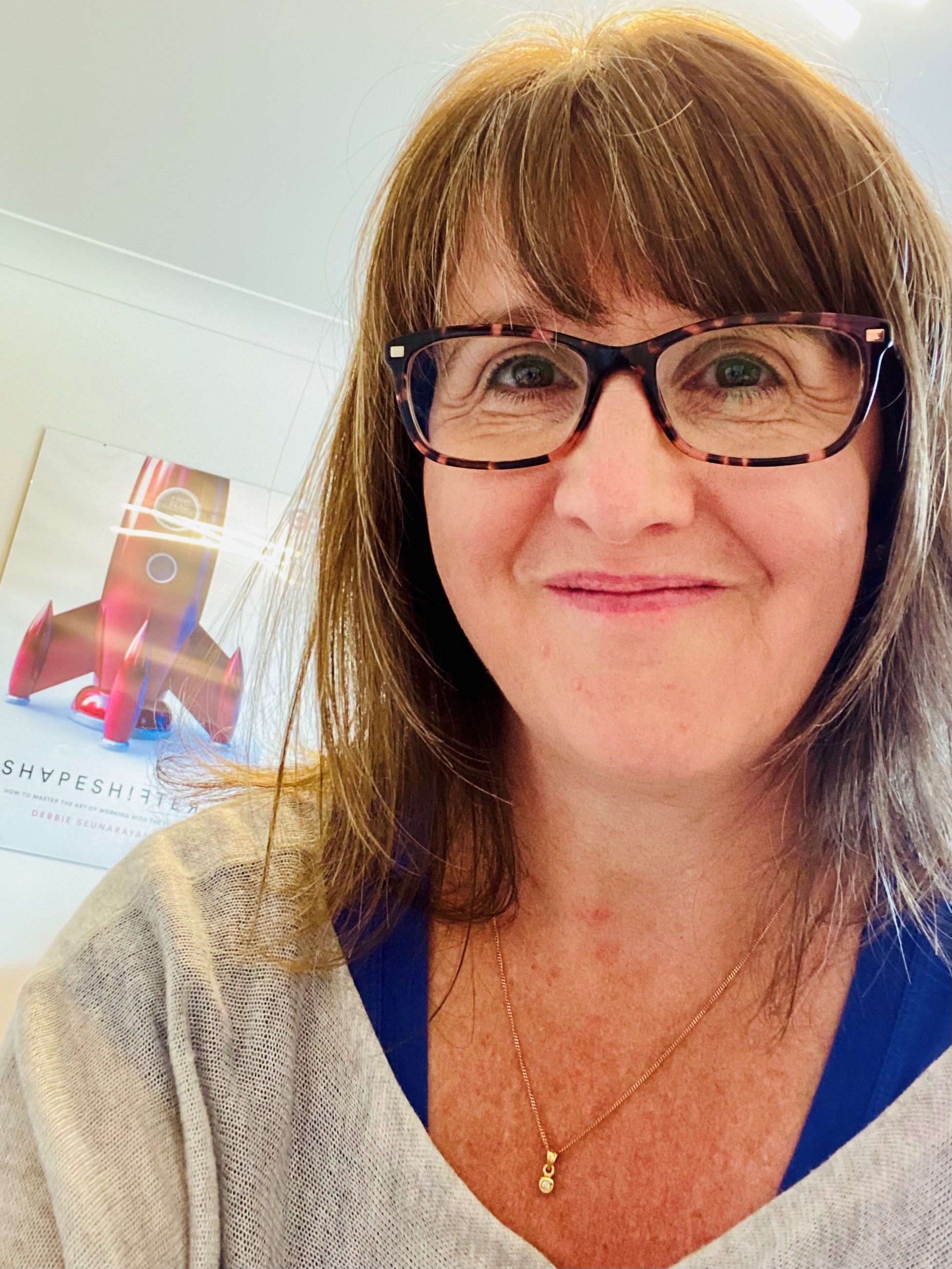
On this week’s show, we welcomed Debbie Seunarayan to discuss the four moves in the VUCA world of projects. Debbie works with organisations and leadership teams across the world to help them navigate turbulent, volatile and sometimes chaotic environments. She has a particular interest in using creativity, scenario planning, wicked thinking and positive deviance to accelerate an organisation’s journey from strategy to reality, and to enhance its collective strategic thinking capability.  Debbie is the host of the What If Tribe and Shapeshifter Tribe podcasts so be sure to give them a listen. The main topics we discussed on the podcast were as follows: VUCA stands for Volatility, Uncertainty, Complexity and Ambiguity.  It dates back to the 1980s and was coined by the US Army War College to describe the state of the world at the end of the Cold War · VUCA is used to describe difficult and chaotic working environments. The main problem is that VUCA is talked about but not acted upon. The last 18 months is a good example of businesses having to work in an uncertain context. The more uncertainty there is can lead people to over managing situations that may not be controllable. Sometimes accepting uncertainty is the best option. The world is changing! Projects will be different in the next 3-5 years – this should be accepted as fact. Four Moves businesses can make in the VUCA world: o Strategy – using scenario planning and what-if scenarios. Create a range of possible paths or a supple strategy! o Culture – Create a compelling culture. Successful organisations have a culture that transcends all the sub-cultures o Innovation – Typically find a “wicked problem”. Find a far-ranging problem and use what-if planning to reach a “cause” that can drive the culture o Magical movement – Purpose based, cause-driven. Changing strategy during the project execution phase is costly.  It is worth stopping to properly assess what is going on around the project in order to review the strategy. As a leader, if the results from feedback loops tell you something different to what is expected then it is time to stop and review. Businesses need to be as inclusive as possible when working in an uncertain environment in order to engender staff to think like leaders. Rather than creating a solution, aim to fall in love with the problem. This can make shifts in the problem rather than solutions being outdated within weeks. Projects can tend to make problems transactional when the real issue stems from poor culture. People with ADHD can often be the best shapeshifters in an organisation! The best businesses have an identity and constantly seek to improve. Trust employees to be autonomous and manage risks. Aim to bring in cross-sector experts when working through problems to achieve a true diversity of thought. If there is a movement that goes in its own direction, it can be successful, however, it is likely to fail if the strategic and cultural implications are not considered. Businesses need to help people see the risks of going in the wrong strategic direction or not taking advantage of the latest market disrupters e.g. Blockbusters and Netflix Here are links to some of the topics that were discussed: Shapeshifter is available on Amazon SHAPESHIFTER: How to master the art of working with the future: Amazon. Proudly Sponsored by:  PlanAcademy.com JustDo.com InEight.com

Guest

Debbie Seunarayan

Debbie Seunarayan

Founder at Gallus

Debbie works with organisations and leadership teams across the world to help them navigate turbulent, volatile and sometimes chaotic environments. Her work spans many sectors and draws on her experience of designing and delivering complex operational and behavioural change, enhancing leadership capability and creating compelling, inclusive cultures. She has a particular interest in using creativity, scenario planning, wicked thinking and positive deviance to accelerate an organisation’s journey from strategy to reality, and to enhance its collective strategic thinking capability. Her recently published book, Shapeshifter, focuses on the 4 moves that successful organisations and leaders adopt to master the art of working with the unpredictable future. Shapeshifter is available on Amazon [SHAPESHIFTER: How to master the art of working with the future: Amazon.co.uk: Seunarayan, Debbie: 9781916119017: Books](https://www.amazon.co.uk/dp/1916119018) And you can find out more about Debbie’s work at [Gallus | Strategy to Reality | Change the world in 4 moves (gallusconsulting.com)](https://gallusconsulting.com/)

Connect

Related Episodes

More conversations on similar topics

S9E205

S9E205: Replicability of the Montreal REM Model with Riccardo Cosentino

In this episode of the Project Chatter podcast, hosts Val and Dale engage with Riccardo Cosentino to explore the unique aspects of the REM project in Canada, a public-private partnership (PPP) model that has garnered attention for its innovative funding and governance structure. Riccardo shares insights into the project's background, the role of the Quebec pension fund as a project sponsor, and the implications of risk management and return calculations. The conversation delves into the importance of early stakeholder involvement, the challenges of public opinion, and the potential for replicating this model in other sectors. Throughout the discussion, the significance of governance, long-term perspectives, and the necessary skill sets for project professionals are emphasized, providing valuable takeaways for listeners interested in infrastructure projects and PPPs. Takeaways The REM project is a unique public-private partnership model. Risk management is crucial in financing infrastructure projects. The obligation to repay investments can shift from taxpayers to private entities. Calculating returns involves considering ridership and land value capture. Contingency planning is integrated into the rate of return. Early involvement of stakeholders leads to better project outcomes. Governance structures can significantly impact project success. Long-term perspectives are essential for managing infrastructure investments. Curiosity and risk-taking are important traits for project professionals. The REM model could be applied to other sectors beyond transportation. Chapters 00:00 Introduction and Guest Background 03:24 Understanding Public-Private Partnerships (PPPs) 06:11 The REM Project Overview 08:56 Funding and Risk Management in the REM Project 11:55 Calculating Returns and Land Value Capture 14:33 Governance and Project Delivery 17:21 Long-Term Perspectives and Lifecycle Management 22:47 Changing Dynamics in Project Management 24:35 Governance and Change Management in Projects 26:38 Replicating Successful Project Models 29:08 Applying the Model Beyond Rail Projects 31:07 Reporting Mechanisms and Governance Structures 33:55 Skill Sets for Successful Project Delivery 35:39 Advice for Aspiring Project Professionals 37:27 Resilience in Today's Project Challenges 39:40 Future of the CDPQ Model and Its Replicability

Listen Now
S8E186

S8E186: Strategic Misrepresentation with Roger Garrini

In this episode, Roger Garrini discusses the concept of strategic misrepresentation in projects. Strategic misrepresentation refers to deliberately and systematically distorting or misstating information for strategic purposes. It often occurs in bids and tenders, where the desire to win the project leads to telling the customer what they want to hear, even if it's not entirely accurate. Strategic misrepresentation can have harmful consequences, such as wasting time and resources, causing budget overruns, and damaging trust. However, there are also instances where strategic misrepresentation can be beneficial, such as boosting confidence and motivation. The line between acceptable and harmful strategic misrepresentation is subjective and depends on the context and consequences. The conversation explores the challenges of strategic misrepresentation in project management and how it affects project outcomes. The guests discuss the reasons behind misrepresentation, such as political pressures and unrealistic expectations. They also explore the role of technology, particularly AI, in improving project delivery and decision-making. The conversation highlights the importance of data integrity and the need for organisations to create a culture of transparency and accountability. The guests suggest several strategies to address strategic misrepresentation, including better project governance, improved training and education, and a focus on ethical behaviour. Roger is a 42 year defence and aerospace, Stated in PMO of major radar project focused on planning ATE and test software against a changing build standard, moved to be PM of same then international bids and investment project including car gadgets and civil aerospace. Moved site and became involved in PM governance and Risk management, thence to ERM and audit finishing as UK IPR manager. Proudly sponsored by Deltek

Listen Now
S8E181

S8E181: Antifragile Projects with Georgia Stillwell

In this episode, Val and Dale are joined by guest Georgia Stillwell to discuss anti-fragile projects and risk management in project management. Georgia shares her journey into project management, starting from her fascination with master planning in cities to her experience in risk management and construction technology. She explains the concept of anti-fragile projects, which are projects that thrive in uncertain and risky environments. The conversation delves into the challenges with traditional project planning methods and the need for more flexible and adaptable approaches. Georgia also discusses the role of technology in risk management and the importance of simplifying complex concepts for effective communication. In this conversation, Georgia Stillwell discusses the concept of anti-fragility in project management and how it can be achieved through the use of technology and human expertise. She emphasizes the importance of replicating the abilities of experienced planners and using AI to optimize project schedules. However, she also highlights the need for human validation and decision-making in complex construction projects. The conversation explores the role of contracts in project behavior and the challenges of harmonizing contracts with anti-fragility principles. The importance of leadership in creating a culture of anti-fragility and addressing human biases is also discussed.Takeaways Anti-fragile projects are projects that thrive in uncertain and risky environments, adapting and improving as challenges arise. Traditional project planning methods, such as critical path method, can be rigid and fail to account for the dynamic nature of projects. Technology, such as AI and software tools, can help optimize project planning and recovery by exploring different options and scenarios. Educating clients and stakeholders about different project planning methodologies is crucial for driving change and improving project outcomes. Simplifying risk management concepts and using analogies can help communicate complex ideas effectively. Anti-fragility in project management can be achieved through the use of technology and human expertise. AI can replicate the abilities of experienced planners and optimize project schedules, but human validation and decision-making are still necessary. Contracts play a significant role in project behavior and can sometimes conflict with anti-fragility principles. Leadership is crucial in creating a culture of anti-fragility and addressing human biases in decision-making. Proudly Sponsored by Deltek

Listen Now

Enjoyed this episode?

Subscribe to never miss a conversation with project experts