S10E2286 November 2026

S10E228: Shadow AI: Your Free ChatGPT Is a Data Breach with Joe Klich

S10E228

S10E228: Shadow AI: Your Free ChatGPT Is a Data Breach with Joe Klich

0:000:00
100%

Someone on your project pasted the schedule into a free ChatGPT account to get it analysed. That is a data breach, and the confidentiality clause they signed does not care that it was convenient. Joe Klich calls it shadow AI, and he thinks it is the most under-discussed risk in construction right now. Joe spent 18 years in commercial construction operations, from the field through executive leadership, before founding Klich Consulting, an operational risk advisory for construction executives. He joins Dale and Val to talk about how fast AI capability is actually doubling (the METR curve has gone from every seven months to every three), why most people cannot keep up and what that gap means for project teams, and how regulators in the US, UK and Australia are all reacting rather than leading. In this episode: why Chinese models at three cents a task will put AI everywhere and magnify the governance problem; the difference between AGI and ASI and why nobody smarter than you will design their own off switch; AI as a hammer, not a colleague; why companies get AI backwards by starting with the tool instead of their people; the cybersecurity parallel from 2010 and why insurers, not legislators, will force AI governance by refusing to pay for AI-related losses; what the jobs of the future look like when a team of ten becomes five; and Joe's closing advice for anyone using AI at work. Connect with Joe Klich on LinkedIn: https://www.linkedin.com/in/joe-klich-96020635/ Hosted by Dale Foong and Val Matthews. The Project Chatter Podcast has been running since 2018 and is free to access, always.

Guest

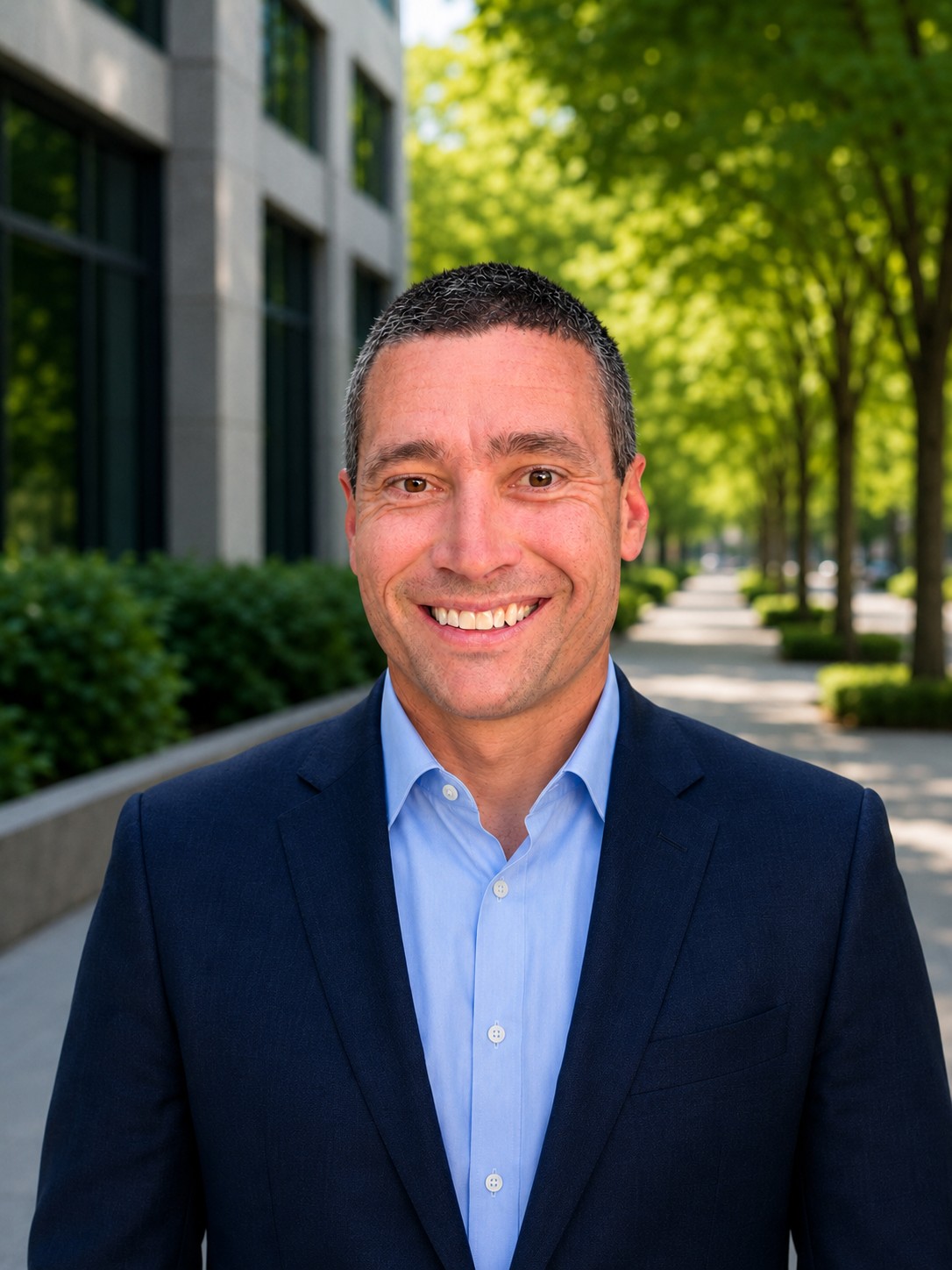
Joe Klich

Joe Klich

Founder & Principal at Klich Consulting

Joe Klich spent 18 years in commercial construction operations, from the field through executive leadership, before founding Klich Consulting, an operational risk advisory practice for construction executives. His work focuses on the problems leaders cannot see yet — from visibility gaps in project reporting to teams adopting AI faster than their organisations can govern it. Joe helps executives capture AI's real productivity gains without the ungoverned exposure that usually comes with them.

Connect

Related Episodes

More conversations on similar topics

S9E205

S9E205: Replicability of the Montreal REM Model with Riccardo Cosentino

In this episode of the Project Chatter podcast, hosts Val and Dale engage with Riccardo Cosentino to explore the unique aspects of the REM project in Canada, a public-private partnership (PPP) model that has garnered attention for its innovative funding and governance structure. Riccardo shares insights into the project's background, the role of the Quebec pension fund as a project sponsor, and the implications of risk management and return calculations. The conversation delves into the importance of early stakeholder involvement, the challenges of public opinion, and the potential for replicating this model in other sectors. Throughout the discussion, the significance of governance, long-term perspectives, and the necessary skill sets for project professionals are emphasized, providing valuable takeaways for listeners interested in infrastructure projects and PPPs. Takeaways The REM project is a unique public-private partnership model. Risk management is crucial in financing infrastructure projects. The obligation to repay investments can shift from taxpayers to private entities. Calculating returns involves considering ridership and land value capture. Contingency planning is integrated into the rate of return. Early involvement of stakeholders leads to better project outcomes. Governance structures can significantly impact project success. Long-term perspectives are essential for managing infrastructure investments. Curiosity and risk-taking are important traits for project professionals. The REM model could be applied to other sectors beyond transportation. Chapters 00:00 Introduction and Guest Background 03:24 Understanding Public-Private Partnerships (PPPs) 06:11 The REM Project Overview 08:56 Funding and Risk Management in the REM Project 11:55 Calculating Returns and Land Value Capture 14:33 Governance and Project Delivery 17:21 Long-Term Perspectives and Lifecycle Management 22:47 Changing Dynamics in Project Management 24:35 Governance and Change Management in Projects 26:38 Replicating Successful Project Models 29:08 Applying the Model Beyond Rail Projects 31:07 Reporting Mechanisms and Governance Structures 33:55 Skill Sets for Successful Project Delivery 35:39 Advice for Aspiring Project Professionals 37:27 Resilience in Today's Project Challenges 39:40 Future of the CDPQ Model and Its Replicability

Listen Now
S8E186

S8E186: Strategic Misrepresentation with Roger Garrini

In this episode, Roger Garrini discusses the concept of strategic misrepresentation in projects. Strategic misrepresentation refers to deliberately and systematically distorting or misstating information for strategic purposes. It often occurs in bids and tenders, where the desire to win the project leads to telling the customer what they want to hear, even if it's not entirely accurate. Strategic misrepresentation can have harmful consequences, such as wasting time and resources, causing budget overruns, and damaging trust. However, there are also instances where strategic misrepresentation can be beneficial, such as boosting confidence and motivation. The line between acceptable and harmful strategic misrepresentation is subjective and depends on the context and consequences. The conversation explores the challenges of strategic misrepresentation in project management and how it affects project outcomes. The guests discuss the reasons behind misrepresentation, such as political pressures and unrealistic expectations. They also explore the role of technology, particularly AI, in improving project delivery and decision-making. The conversation highlights the importance of data integrity and the need for organisations to create a culture of transparency and accountability. The guests suggest several strategies to address strategic misrepresentation, including better project governance, improved training and education, and a focus on ethical behaviour. Roger is a 42 year defence and aerospace, Stated in PMO of major radar project focused on planning ATE and test software against a changing build standard, moved to be PM of same then international bids and investment project including car gadgets and civil aerospace. Moved site and became involved in PM governance and Risk management, thence to ERM and audit finishing as UK IPR manager. Proudly sponsored by Deltek

Listen Now
S7E174

S7E174: Breaking down the barriers to implementation of good practice with Adrian Dooley

In this episode, Adrian Dooley discusses the barriers to applying good project management practices and the root causes behind them. He highlights the issue of project failure and the need to identify the true causes rather than just the symptoms. Adrian also explores the challenges of applying lessons learned and the impact of forgetting and lack of support. He emphasizes the potential of AI in project management but cautions against the dissemination of unreliable information. Additionally, he addresses the cost and accessibility of training and the importance of practical application and soft skills. Finally, Adrian shares the benefits of the Praxis Framework and the power of checklists in improving project outcomes. In this conversation, Adrian Dooley discusses the importance of integrating good practices and overcoming barriers to embedding them. He emphasizes the need to focus on the basics and not overcomplicate project management. Adrian shares anecdotes and highlights the value of involving business stakeholders, understanding requirements, and applying simple approaches. He encourages project managers to communicate and convince their organizations to provide space for applying learned practices. Adrian concludes by reminding listeners that projects can succeed and make a difference when common sense and the fundamentals are applied.Takeaways Integrate good practices and make them accessible to the organization. Identify and overcome barriers to embedding good practices. Focus on the basics and avoid overcomplicating project management. Involve business stakeholders, understand requirements, and apply simple approaches. Communicate and convince organisations to provide space for applying learned practices. Projects can succeed when common sense and fundamentals are applied. Originally a project manager on construction, Adrian has held various roles in project management for 45 years. He was part of the team that created one of the first project scheduling software packages and was founder member of the first independent project management magazine -Project Manager Today. He founded The Projects Group (a training and consultancy company) and served on the Executive Council of the APM. He is a non-executive Director of APM Group and the lead author of the Praxis Framework.

Listen Now

Enjoyed this episode?

Subscribe to never miss a conversation with project experts