S5E10323 January 2022

S5E103: The Project Economy with Antonio Nieto-Rodriguez

S5E103

S5E103: The Project Economy with Antonio Nieto-Rodriguez

0:000:00
100%

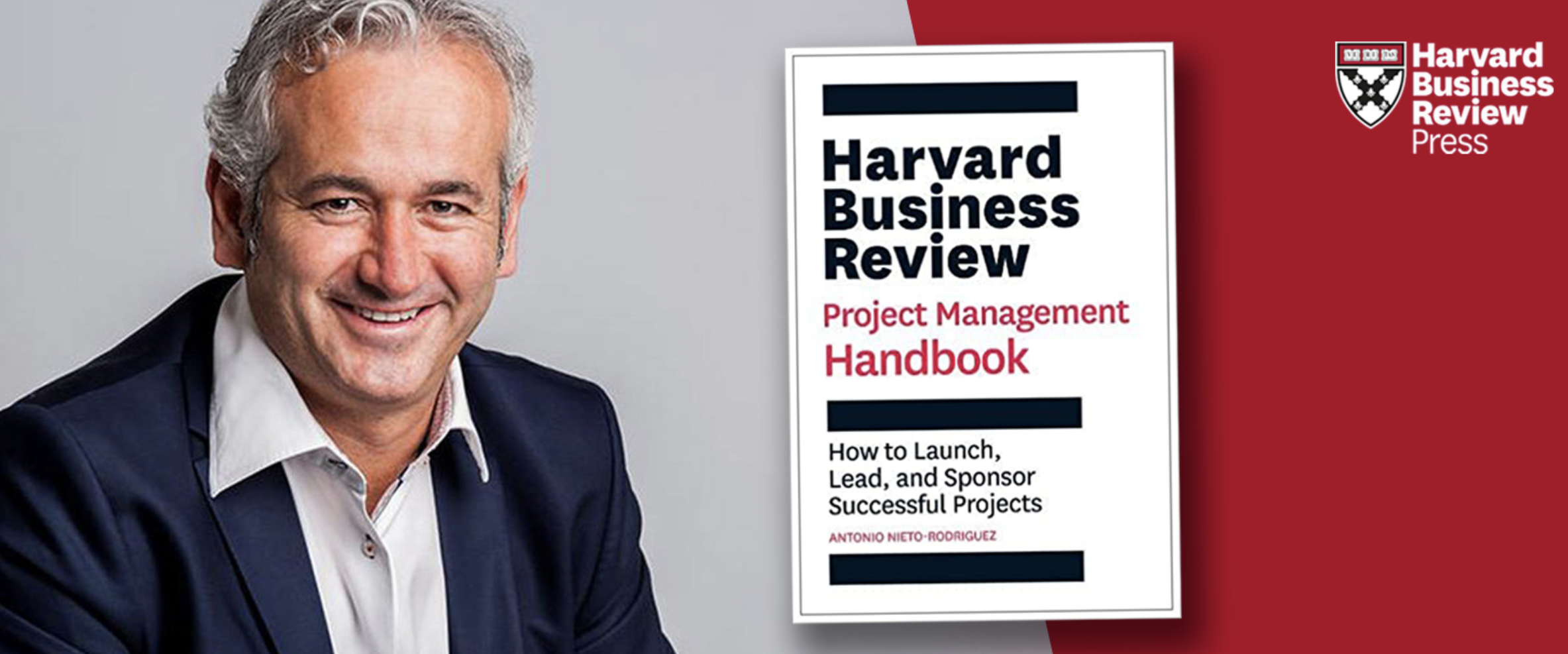
In this epsiode, Dale and Val catch up with Antonio on the interesting world and growth of project management across the globe. With an economy shaken by the pandemic, it seems projects are becoming more and more important, not just to the client and sectors they serve, but more broadly as a product unto themselves, contributing directly to the countries GDP. Our guest in this episode is no stranger to the trends of project management and provide clarity and insight as an author on this subject, in various online forums and books. VM - Author of the Harvard Business Review Project Management Handbook and four other books, Antonio is the creator of concepts such as the Project Economy and the Project Manifesto. His research and global impact in modern management have been recognized by Thinkers50. Former Chairman of the Project Management Institute, he is the founder of Projects&Co and co-founder of the Strategy Implementation Institute. >>>>> Born in Madrid, Spain, and educated in Germany, Mexico, Italy, and the United States, Antonio is fluent in five languages. He has an MBA from London Business School. He is a member of Marshall Goldsmith 100 coaches. You can follow Antonio through his LinkedIn Newsletter - Lead Projects Successfully and website. Proudly sponsored by:PlanAcademy.com | InEight.com | Prosci.com Stay safe, be disruptive and have fun doing it!#ProjectManagement #Technology #PMO #ProjectControls #Leadership #Culture #ProjectCertifications

Guest

Antonio Nieto-Rodriguez

Antonio Nieto-Rodriguez

Author, Professor, Speaker, Founder at Projects & Co // Strategy Implementation Institute

VM - Author of the _[Harvard Business Review Project Management Handbook](https://www.amazon.com/Harvard-Business-Project-Management-Handbook/dp/1647821266)_ and four other books, Antonio is the creator of concepts such as the Project Economy and the Project Manifesto. His research and global impact in modern management have been recognized by Thinkers50. Former Chairman of the Project Management Institute, he is the founder of [Projects&Co](https://projectsnco.com/) and co-founder of the [Strategy Implementation Institute](https://www.strategyimplementationinstitute.org/). \>>>>> Born in Madrid, Spain, and educated in Germany, Mexico, Italy, and the United States, Antonio is fluent in five languages. He has an MBA from London Business School. He is a member of Marshall Goldsmith 100 coaches. You can follow Antonio through his [LinkedIn Newsletter - Lead Projects Successfully](https://www.linkedin.com/newsletters/lead-projects-successfully-6820596029113565184/) and [website](https://antonionietorodriguez.com/).

Connect

Related Episodes

More conversations on similar topics

S10E219

S10E219: Why 88% of Schedules Fail, and What AI Still Can't Fix with Michael Pink

88% of project schedules don't follow best practice. So why are we so keen to feed that data into AI and trust the output? In this episode, Dale and Val are joined by Michael Pink, Founder of SmartPM, for a sharp conversation on the forensic side of delay and the state of AI in project controls. Mike has analysed hundreds of thousands of schedules and built a career on working out who delayed what, and why nobody could ever agree. His core message: clean data is not the same as honest data. A technically tidy schedule can tell you a story that never happened, and if you point AI at it, you don't get insight, you get a confident wrong answer at scale. What we cover: Mike's route into construction, from a study-abroad debt to KPMG's construction consulting group 25 years of change in the people and process side of scheduling The shift from reactive forensic work to proactive project controls Data honesty vs data quality, and why integrity is the combination of both (framing credited to Isaac Dyer and Carlos Sanchez) The 88% problem: missing logic, inflated float and moving dates The compression factor, and the exact point a schedule becomes infeasible Why a weekly update beats a monthly one, for almost no extra time P6 vs Microsoft Project, and grading schedule quality across 35 metrics Where LLMs genuinely help, and why quantitative AI is still the long game The future of the scheduler: less building and cleaning, more strategy A genuinely optimistic look at where the profession is heading, and why this might be the best time yet to be in project controls. This episode is proudly sponsored by nPlan.nPlan Summer AI Day 2026: Construction Superintelligence takes place in London on Thursday 25 June 2026, with a fireside featuring Peter Hancock, Project Director at National Grid, and Dima Pogorelsky, MD and Partner at BCG. February's event sold out with standing room only. Register here:https://www.nplan.io/events/nplan-summer-ai-day-2026-construction-superintelligence Connect with Michael Pink at https://www.smartpm.com or on LinkedIn. If you enjoyed this episode, help us pay it forward and share it. Stay safe, be disruptive, and have fun doing it.

Listen Now
S9E205

S9E205: Replicability of the Montreal REM Model with Riccardo Cosentino

In this episode of the Project Chatter podcast, hosts Val and Dale engage with Riccardo Cosentino to explore the unique aspects of the REM project in Canada, a public-private partnership (PPP) model that has garnered attention for its innovative funding and governance structure. Riccardo shares insights into the project's background, the role of the Quebec pension fund as a project sponsor, and the implications of risk management and return calculations. The conversation delves into the importance of early stakeholder involvement, the challenges of public opinion, and the potential for replicating this model in other sectors. Throughout the discussion, the significance of governance, long-term perspectives, and the necessary skill sets for project professionals are emphasized, providing valuable takeaways for listeners interested in infrastructure projects and PPPs. Takeaways The REM project is a unique public-private partnership model. Risk management is crucial in financing infrastructure projects. The obligation to repay investments can shift from taxpayers to private entities. Calculating returns involves considering ridership and land value capture. Contingency planning is integrated into the rate of return. Early involvement of stakeholders leads to better project outcomes. Governance structures can significantly impact project success. Long-term perspectives are essential for managing infrastructure investments. Curiosity and risk-taking are important traits for project professionals. The REM model could be applied to other sectors beyond transportation. Chapters 00:00 Introduction and Guest Background 03:24 Understanding Public-Private Partnerships (PPPs) 06:11 The REM Project Overview 08:56 Funding and Risk Management in the REM Project 11:55 Calculating Returns and Land Value Capture 14:33 Governance and Project Delivery 17:21 Long-Term Perspectives and Lifecycle Management 22:47 Changing Dynamics in Project Management 24:35 Governance and Change Management in Projects 26:38 Replicating Successful Project Models 29:08 Applying the Model Beyond Rail Projects 31:07 Reporting Mechanisms and Governance Structures 33:55 Skill Sets for Successful Project Delivery 35:39 Advice for Aspiring Project Professionals 37:27 Resilience in Today's Project Challenges 39:40 Future of the CDPQ Model and Its Replicability

Listen Now
S9E202

S9E202: How to be a World Class Scheduler without opening the Schedule with Micah Piippo

In this episode of the Project Chatter podcast, Dale speaks with Micah Piippo, a leading voice in construction planning and scheduling. They discuss the evolving role of AI in project management, the importance of understanding the fundamentals of scheduling, and how to effectively review and validate schedules without getting lost in the details. Micah shares insights on common mistakes in project meetings, the significance of critical path and float, and the necessity of resource loading. The conversation also touches on contractual considerations and the importance of commissioning plans in project delivery. Takeaways šŸ’„ AI is revolutionizing project planning and scheduling. šŸ’„ Understanding the role of a scheduler is crucial for project success. šŸ’„ Common mistakes in project meetings can derail progress. šŸ’„ The schedule is fundamentally a mathematical calculation. šŸ’„ Critical path and float are essential concepts in scheduling. šŸ’„ Resource loading should be tailored to project needs. šŸ’„ Contractual specifications guide scheduling processes.šŸ’„ Effective communication between owners and contractors is vital. šŸ’„ Commissioning plans should be established early in the project. šŸ’„ Project leaders should focus on forecasting and data-driven decisions. Links Beyond Deadlines: https://youtube.com/@beyonddeadlines?si=HfE1Mosc2oL9o2v1

Listen Now

Enjoyed this episode?

Subscribe to never miss a conversation with project experts