S3E7129 May 2021

S3E71: How Adaptive Project Management Improves Projects with Gary Wong & Hendrik Lourens

S3E71

S3E71: How Adaptive Project Management Improves Projects with Gary Wong & Hendrik Lourens

0:000:00
100%

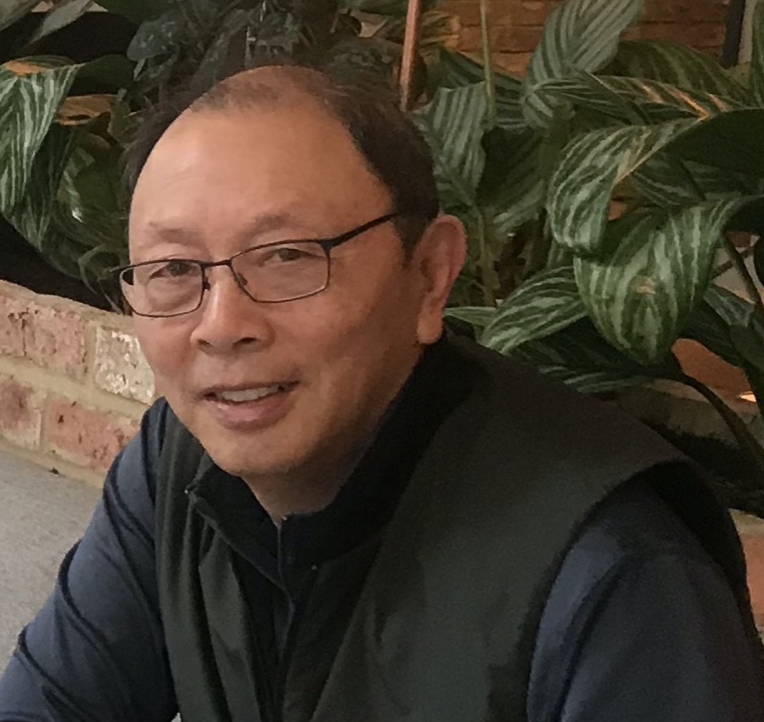
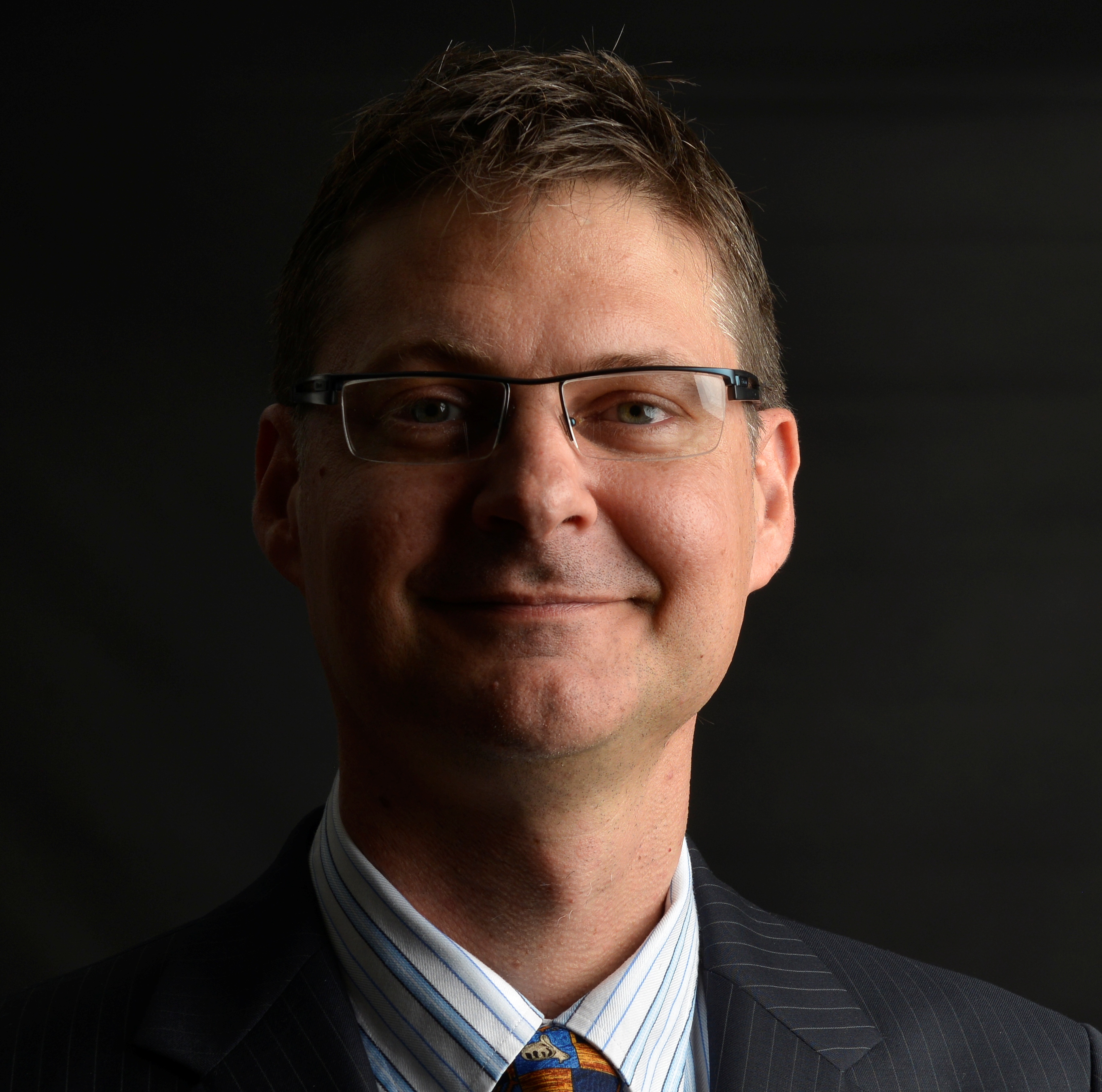
In this episode, Dale and Val talk about adaptive projects management and how skills and demands are changing, as well as how we should perceive the needs. We talk to Gary Wong and Hendrik Lourens about their vast knowledge in this area and how adaptive project management can truly improve project performance.  A bit about our guests; Gary Wong has over 45 years of experience starting with his career in an electrical utility where he worked in engineering, line operations, business consulting and training roles. PM responsibilities included managing electric utility construction and maintenance projects and running a PMO for Business Process re-engineering initiatives. He later joined Ernst & Young Consulting (now Capgemini Consulting) as a Senior Manager in Strategy & Transformation. Gary has operated his own independent consulting practice over the past 15 years focusing on complexity thinking and safety. He is a training associate with Cognitive-Edge Inc. and co-authors and delivers complexity courses and workshops. Gary has an engineering degree from UBC and an MBA from SFU. He also has held roles as a certified FranklinCovey 7 Habits facilitator and an Edward de Bono Six Thinking Hats and Lateral Thinking instructor. Hendrik Lourens is the owner of Stratflow, a company that provides solutions to project focussed companies that are looking to mitigate risk and to deliver immediate and significant results. He helps his clients to achieve breakthrough performance by clarifying the inherent simplicity in complicated and pressured environments and focussing their effort on the few critical leverage points that affect their system. Hendrik is a physicist by training with advanced qualifications in Polymer Science, accreditation in Theory of Constraints (Critical Chain Project Management, Finance, Operations and Supply chain, Thinking Processes) as well as an MBA. Hendrik has worked at the Director level in manufacturing businesses and for a number of Tier 1 companies.  He has worked with companies such as Aurizon, Qantas, John Holland, CPB, Downer, BHP & Anglo American and published widely on productivity, digitisation and social licence. This podcast is brought to you by:      JustDo.com    InEight.com     PlanAcademy.com - save $75 on any course with this link - www.planacademy.com/chatter/ #projectmanagement #projectcontrols #projectplanning #projectriskmanagement #projectledaership

Guests

Gary Wong

Gary Wong

Complexity Facilitator at Gary Wong & Associates

Gary lives in Vancouver, Canada. He has over 45 years of experience starting with his career in an electrical utility where he worked in engineering, line operations, business consulting and training roles. PM responsibilities included managing electric utility construction and maintenance projects and running a PMO for Business Process Reengineering initiatives. He later joined Ernst & Young Consulting (now Capgemini Consulting) as a Senior Manager in Strategy & Transformation. Gary has operated his own independent consulting practice over the past 15 years focusing on complexity thinking and safety. He is a training associate with Cognitive-Edge Inc. and co-authors and delivers complexity courses and workshops. Gary has an engineering degree from UBC and an MBA from SFU. He also has held roles as a certified FranklinCovey 7 Habits facilitator and an Edward de Bono Six Thinking Hats and Lateral Thinking instructor.

Connect
Hendrik Lourens

Hendrik Lourens

Owner at Stratflow Australia

Hendrik Lourens is the owner of Stratflow, a company that provides solutions to project focussed companies that are looking to mitigate risk and to deliver immediate and significant results. He helps his clients to achieve breakthrough performance by clarifying the inherent simplicity in complicated and pressured environments and focussing their effort on the few critical leverage points that affect their system. Hendrik is a physicist by training with advanced qualifications in Polymer Science, accreditation in Theory of Constraints (Critical Chain Project Management, Finance, Operations and Supply chain, Thinking Processes) as well as an MBA. Hendrik has worked at Director level in manufacturing businesses and for a number of Tier 1 companies. He has worked with companies such as Aurizon, Qantas, John Holland, CPB, Downer, BHP & Anglo American and published widely on productivity, digitisation and social licence.

Connect

Related Episodes

More conversations on similar topics

S6E128

S6E128: Creating Value from Adapting Agility to Project Management with Adrian Pyne

In this week’s pod, we welcomed Adrian Pyne to discuss what project agility really looks like. Adrian is above all a project professional. He has led or rescued Transformation programmes widely from Telcos to eCommerce, Finance. Mining, Aviation, and the public sector. He has designed, built and operated P3 (project, programme and portfolio management) capability, PMOs, and Professional Services businesses. His key skill is the adaptation of best practice successfully. In the last 10 years his consultancy has focussed on two areas. Firstly, what he and colleagues call Organisational Project Management – the creation of an organisation culture that enables projects to Thrive and not merely Survive, or even die. Secondly, on Agile Project Management which too many organisations get badly, and expensively, wrong. He has written Agile Beyond IT, a book on Agile Project Management, showing how it both can be used well beyond the realm of IT Agile software development projects.. Adrian says he will also show that Agile projects can have any life-cycle they need. Adrian remains a frequent speaker around APM and elsewhere, including internationally, and is a visiting lecturer at Nottingham and Southampton University Business Schools, He is also a regular blogger, and he says, is still learning. Adrian is semi-retired and lives with his partner in Dorset. The main topics we discussed on the podcast were as follows: Agile or Agility comes from the Agile Manifesto 2001 (4 values). It was always intended to be used for Software Development Great project professionals are agile! We “do” projects to deliver value. Agile is focused on the delivery of value In the late 90s / early 2000s saw a realization that people deliver projects. If they are not engaged and focused, the project is likely to fail There is no point implementing agile projects if the organizational culture is toxic A hybrid approach between Agile and Critical Path methodologies is often challenging. When you adapt agility to Project Management, it is adapted to everything including planning / scheduling. This needs to keep pace in order for it to work Scrum is a purely software development approach – it is NOT a project management approach Some of the major agile certifications are heavily focused towards IT projects. This needs to be broadened to make it more relevant Agile projects should aim to make an audit trail of the value within a project For every project change request – does it enhance the value? Organisations that do not adopt agility are more likely to be commercial risk Here are links to a some of the topics we discussed: Agile Beyond IT: How to Develop Agility in Project Management in any Sector –  Adrian Pyne https://www.amazon.co.uk/Agile-Beyond-develop-agility-management/dp/1788603273 Manifesto for Agile Software Development - https://agilemanifesto.org/ Jo Lucas – Activating the Mycelium - https://sustainabilitypractitioners.org/rpm-ego-to-eco-in-conversation-with-jo-lucas/ Forbes: How to Succeed in a Project Economy - https://www.forbes.com/sites/rebeccazucker/2022/01/11/how-to-succeed-in-a-project-economy/?sh=668b222a28d9 Agile Beyond IT Newsletter - https://www.linkedin.com/newsletters/agile-beyond-it-6922580439241007104/ Tune in next time when we’re joined by Spencer Easton to talk about Takt production vs Takt time.  For more information, blogs or to support our charities visit www.projectchatterpodcast.com  If you'd like to sponsor the podcast get in touch via our website. You can also leave us a voice message via our anchor page and let us know if there's something or someone specific that you would like on the podcast. Proudly sponsored by: JustDo - https://www.justdo.com/ PlanAcademy - https://www.planacademy.com/chatter/ ($75 off any course) InEight - https://ineight.com/ Prosci - https://empower.prosci.com/project-ch... (FREE resource kit) Stay safe, be disruptive and have fun doing it!

Listen Now
S9E205

S9E205: Replicability of the Montreal REM Model with Riccardo Cosentino

In this episode of the Project Chatter podcast, hosts Val and Dale engage with Riccardo Cosentino to explore the unique aspects of the REM project in Canada, a public-private partnership (PPP) model that has garnered attention for its innovative funding and governance structure. Riccardo shares insights into the project's background, the role of the Quebec pension fund as a project sponsor, and the implications of risk management and return calculations. The conversation delves into the importance of early stakeholder involvement, the challenges of public opinion, and the potential for replicating this model in other sectors. Throughout the discussion, the significance of governance, long-term perspectives, and the necessary skill sets for project professionals are emphasized, providing valuable takeaways for listeners interested in infrastructure projects and PPPs. Takeaways The REM project is a unique public-private partnership model. Risk management is crucial in financing infrastructure projects. The obligation to repay investments can shift from taxpayers to private entities. Calculating returns involves considering ridership and land value capture. Contingency planning is integrated into the rate of return. Early involvement of stakeholders leads to better project outcomes. Governance structures can significantly impact project success. Long-term perspectives are essential for managing infrastructure investments. Curiosity and risk-taking are important traits for project professionals. The REM model could be applied to other sectors beyond transportation. Chapters 00:00 Introduction and Guest Background 03:24 Understanding Public-Private Partnerships (PPPs) 06:11 The REM Project Overview 08:56 Funding and Risk Management in the REM Project 11:55 Calculating Returns and Land Value Capture 14:33 Governance and Project Delivery 17:21 Long-Term Perspectives and Lifecycle Management 22:47 Changing Dynamics in Project Management 24:35 Governance and Change Management in Projects 26:38 Replicating Successful Project Models 29:08 Applying the Model Beyond Rail Projects 31:07 Reporting Mechanisms and Governance Structures 33:55 Skill Sets for Successful Project Delivery 35:39 Advice for Aspiring Project Professionals 37:27 Resilience in Today's Project Challenges 39:40 Future of the CDPQ Model and Its Replicability

Listen Now
S6E150

S6E150: Project Controls in Design & Engineering stages with Paul Waskett

In this week’s pod, we were joined by Paul Waskett to discuss Project Controls in design and engineering stages. Paul is a Director of Adept Management where he takes responsibility for the development of their Project Controls tools and services, as well as supporting clients and projects across the construction industry. Since 2014, Paul has been supporting two major rail projects. He is a Mechanical Engineer by background and has over 20 years’ experience in Design Management and Project Controls. In addition, Paul has spent time working in central government, where he managed a construction innovation budget, and as a researcher where he developed some of Adept Management's innovative approaches to design planning and management.  The main topics we discussed on the podcast were as follows: There is generally more scrutiny on the construction part of a design and build contract however both need equal attention in order to manage projects effectively Design planning is not as linear as other types of programmes. There are generally more interdependencies and iterations of designs Build a WBS and identify relevant activities and inputs before starting the planning process As the project is delivered, the Last Planner System can be used to monitor progress Using % complete to measure design progress can be difficult to implement consistently Working from home has made it more difficult to promote communication and problem solving in major projects as the relevant stakeholders are not collaborating as often as they would in an office based environment Earned Value Management only works when rules of credit are in place and all stakeholders are aware of the limitations of it being the sole measure of progress Digital twin can help engineers to assess the effect of what may seem like a small scale change on a design It is prudent to have a sole interface between engineering and project management in order to deliver a consistent message One of the key challenges for Engineering Managers is to get the “commitment” from the engineering team(s) to deliver to a specified date or budget Here are links to some of the topics we discussed: The Latham Report – Constructing The Team: https://constructingexcellence.org.uk/wp-content/uploads/2014/10/Constructing-the-team-The-Latham-Report.pdf Adept Management: https://www.adeptmanagement.com/ Last Planner System: https://leanconstructionblog.com/What-is-the-Last-Planner-System.html Join us next week when we speak to Tony Welch to discuss five levers for change. For more information, blogs or to support our charities visit www.projectchatterpodcast.com If you'd like to sponsor the podcast get in touch via our website.You can also leave us a voice message via our anchor page and let us know if there's something or someone specific that you would like on the podcast. Proudly sponsored by: https://www.justdo.com/ https://ineight.com/ Stay safe, be disruptive and have fun doing it! #ProjectManagement #Engineering #PMO #ProjectControls #Leadership #Culture

Listen Now

Enjoyed this episode?

Subscribe to never miss a conversation with project experts