S7E15625 March 2023

S7E156: Navigating the Project Control Landscape: A Journey Through the Decades and Beyond with Shane Forth

S7E156

S7E156: Navigating the Project Control Landscape: A Journey Through the Decades and Beyond with Shane Forth

0:000:00
100%

In this week’s pod, we were joined by Shane Forth to discuss Navigating the Project Control Landscape: A Journey Through the Decades and Beyond. Shane’s project controls career began on Phillips Petroleum Teesside Oil Terminal, a 1970s mega-project. Aged 20, he learnt the fundamentals of scheduling using manual techniques. Career progression followed with three further mega-projects worth tens of billions of pounds in today’s terms. This was interspersed with UK construction projects for leading mechanical contractors. In 1992, as Planning Manager for a major EPC contractor, he quickly learned two important lessons. His enthusiasm to introduce effective project controls integrating cost and schedule was out of step with senior management and a discovery of a skills gap and shortage of project controls resource. His industry leadership, uniting groups and individuals to create project controls standards, occupational certifications, career paths, competency frameworks, higher professional recognition, and especially apprenticeship programmes, may Shane’s my most enduring legacy. The main topics we discussed on the podcast were as follows: The main evolutions in Project Controls are a realization around the importance of data to major projects and having a dedicated resource pool Ask the right questions, get the right answers When delivering bad news as a Project Controller, always try to de-personalise the updates Project Controllers should aim to engage the experts if they are not sure on a subject New starters to the Project Controls function should try to work on their literacy and presentational skills as these are two key competencies that will be used throughout your career Project Controls is now seen as a core function and not just an optional extra on major projects Here are links to some of the topics we discussed: Human Resource Skills for the Project Manager: https://www.amazon.co.uk/gp/product/1880410419/ref=ppx_od_dt_b_asin_title_s00?ie=UTF8&psc=1 Handbook of People in Project Management: https://www.amazon.co.uk/gp/product/140943785X?ref_=dbs_m_mng_rwt_calw_thcv_0&storeType=ebooks&asin=140943785X&revisionId=&format=4&depth=1 Join us next time when we’re joined by Ellen Mellington to discuss Streamlining Operations with Agile Controls: The Key to Business-As-Usual Performance. For more information, blogs or to support our charities visit www.projectchatterpodcast.com If you’d like to sponsor the podcast get in touch via our website. You can also leave us a voice message via our anchor page and let us know if there’s something or someone specific that you would like on the podcast. Proudly sponsored by:  InEight – https://ineight.com/

Guest

Shane Forth

Shane Forth

Principal Consultant at GO FORTH

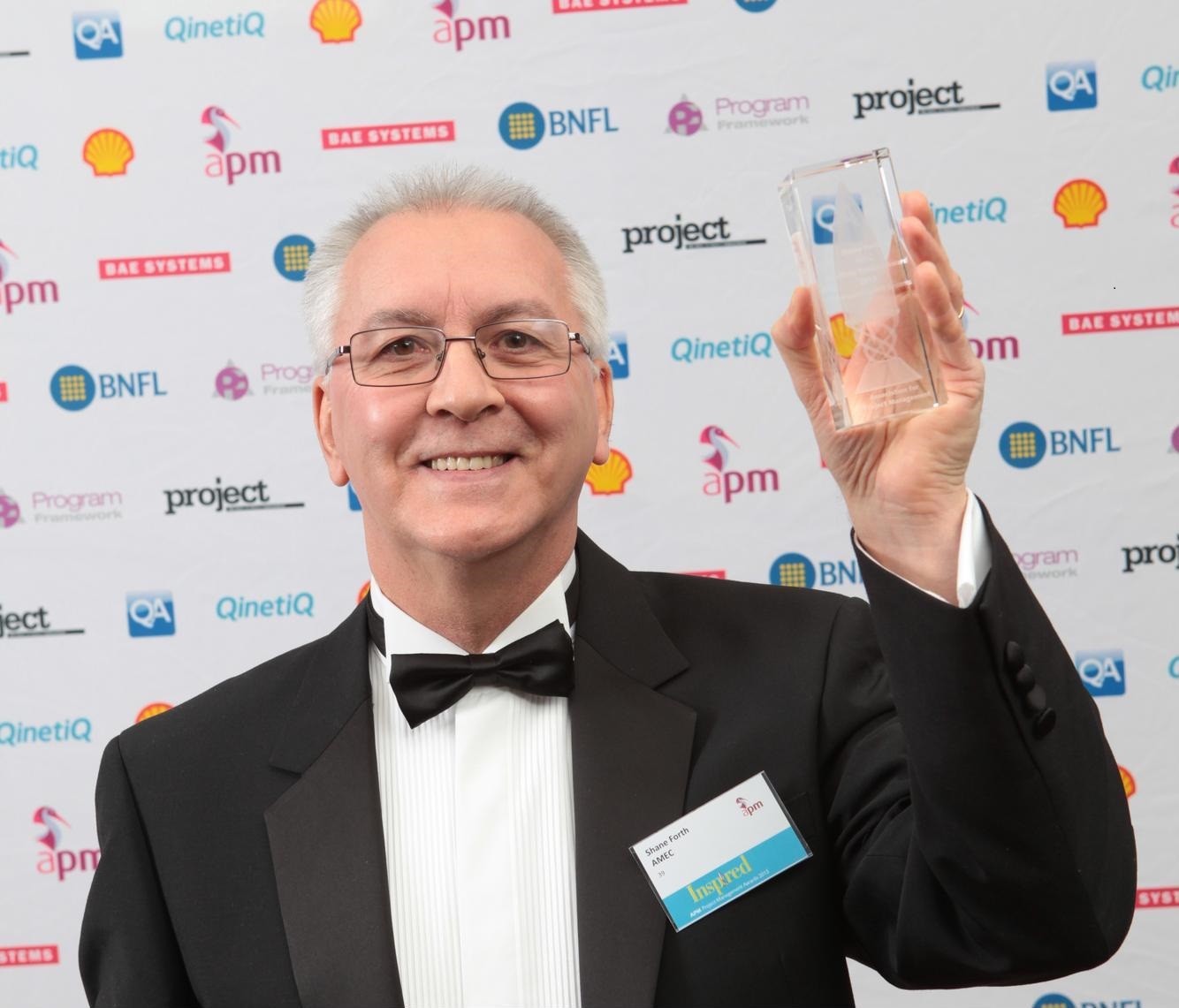
Shane’s project controls career began on Phillips Petroleum Teesside Oil Terminal, a 1970s mega-project. Aged 20, he learnt the fundamentals of scheduling using manual techniques. Career progression followed with 3 further mega-projects worth tens of billions of pounds in todays terms. This was interspersed with UK construction projects for leading mechanical contractors. In 1992, as Planning Manager for a major EPC contractor, he quickly learned two important lessons: § His enthusiasm to introduce effective project controls integrating cost and schedule was out of step with senior management § He discovered a skills gap and shortage of project controls resource. These challenges have since fuelled his drive to mature the function and grow and its resources. Shane has embraced projects of all shapes, sizes. and lifecycle phases. As a project controls leader across Oil & Gas, Nuclear, Power, Process, Infrastructure, Steel, Pharmaceuticals and Manufacturing sectors, he has consistently taken the lead as an early adopter of new project control techniques. He share his knowledge and experience within and beyond his organisations. His inspirational leadership, enthusiasm, energy and motivational skills, realise benefits for the project controls community and inspires others. Shane’s thought leadership activities are unparalleled. Speaking at prestigious international conferences, he has developed close ties with academia and is consulting editor/author of the _Practitioner Handbook of Project Controls._ A fellow of APM and ACostE, I served two-terms as Vice-President, Shane is past chair of BCECA Project Control Managers Committee. His industry leadership, uniting groups and individuals to create project controls standards, occupational certifications, career paths, competency frameworks, higher professional recognition, and especially apprenticeship programmes, may Shane’s my most enduring legacy. This includes the UK’s 1st project controls apprenticeship in 2007. He was later elected as chair of Project Controls Technician Apprenticeship Trailblazer.

Connect

Related Episodes

More conversations on similar topics

S9E205

S9E205: Replicability of the Montreal REM Model with Riccardo Cosentino

In this episode of the Project Chatter podcast, hosts Val and Dale engage with Riccardo Cosentino to explore the unique aspects of the REM project in Canada, a public-private partnership (PPP) model that has garnered attention for its innovative funding and governance structure. Riccardo shares insights into the project's background, the role of the Quebec pension fund as a project sponsor, and the implications of risk management and return calculations. The conversation delves into the importance of early stakeholder involvement, the challenges of public opinion, and the potential for replicating this model in other sectors. Throughout the discussion, the significance of governance, long-term perspectives, and the necessary skill sets for project professionals are emphasized, providing valuable takeaways for listeners interested in infrastructure projects and PPPs. Takeaways The REM project is a unique public-private partnership model. Risk management is crucial in financing infrastructure projects. The obligation to repay investments can shift from taxpayers to private entities. Calculating returns involves considering ridership and land value capture. Contingency planning is integrated into the rate of return. Early involvement of stakeholders leads to better project outcomes. Governance structures can significantly impact project success. Long-term perspectives are essential for managing infrastructure investments. Curiosity and risk-taking are important traits for project professionals. The REM model could be applied to other sectors beyond transportation. Chapters 00:00 Introduction and Guest Background 03:24 Understanding Public-Private Partnerships (PPPs) 06:11 The REM Project Overview 08:56 Funding and Risk Management in the REM Project 11:55 Calculating Returns and Land Value Capture 14:33 Governance and Project Delivery 17:21 Long-Term Perspectives and Lifecycle Management 22:47 Changing Dynamics in Project Management 24:35 Governance and Change Management in Projects 26:38 Replicating Successful Project Models 29:08 Applying the Model Beyond Rail Projects 31:07 Reporting Mechanisms and Governance Structures 33:55 Skill Sets for Successful Project Delivery 35:39 Advice for Aspiring Project Professionals 37:27 Resilience in Today's Project Challenges 39:40 Future of the CDPQ Model and Its Replicability

Listen Now
S9E202

S9E202: How to be a World Class Scheduler without opening the Schedule with Micah Piippo

In this episode of the Project Chatter podcast, Dale speaks with Micah Piippo, a leading voice in construction planning and scheduling. They discuss the evolving role of AI in project management, the importance of understanding the fundamentals of scheduling, and how to effectively review and validate schedules without getting lost in the details. Micah shares insights on common mistakes in project meetings, the significance of critical path and float, and the necessity of resource loading. The conversation also touches on contractual considerations and the importance of commissioning plans in project delivery. Takeaways 💥 AI is revolutionizing project planning and scheduling. 💥 Understanding the role of a scheduler is crucial for project success. 💥 Common mistakes in project meetings can derail progress. 💥 The schedule is fundamentally a mathematical calculation. 💥 Critical path and float are essential concepts in scheduling. 💥 Resource loading should be tailored to project needs. 💥 Contractual specifications guide scheduling processes.💥 Effective communication between owners and contractors is vital. 💥 Commissioning plans should be established early in the project. 💥 Project leaders should focus on forecasting and data-driven decisions. Links Beyond Deadlines: https://youtube.com/@beyonddeadlines?si=HfE1Mosc2oL9o2v1

Listen Now
S8E186

S8E186: Strategic Misrepresentation with Roger Garrini

In this episode, Roger Garrini discusses the concept of strategic misrepresentation in projects. Strategic misrepresentation refers to deliberately and systematically distorting or misstating information for strategic purposes. It often occurs in bids and tenders, where the desire to win the project leads to telling the customer what they want to hear, even if it's not entirely accurate. Strategic misrepresentation can have harmful consequences, such as wasting time and resources, causing budget overruns, and damaging trust. However, there are also instances where strategic misrepresentation can be beneficial, such as boosting confidence and motivation. The line between acceptable and harmful strategic misrepresentation is subjective and depends on the context and consequences. The conversation explores the challenges of strategic misrepresentation in project management and how it affects project outcomes. The guests discuss the reasons behind misrepresentation, such as political pressures and unrealistic expectations. They also explore the role of technology, particularly AI, in improving project delivery and decision-making. The conversation highlights the importance of data integrity and the need for organisations to create a culture of transparency and accountability. The guests suggest several strategies to address strategic misrepresentation, including better project governance, improved training and education, and a focus on ethical behaviour. Roger is a 42 year defence and aerospace, Stated in PMO of major radar project focused on planning ATE and test software against a changing build standard, moved to be PM of same then international bids and investment project including car gadgets and civil aerospace. Moved site and became involved in PM governance and Risk management, thence to ERM and audit finishing as UK IPR manager. Proudly sponsored by Deltek

Listen Now

Enjoyed this episode?

Subscribe to never miss a conversation with project experts