
S5E1098 March 2022

S5E109: Enabling early careers in Project Controls with Michelle Banner & Johnny Shepherd

S5E109

S5E109: Enabling early careers in Project Controls with Michelle Banner & Johnny Shepherd

0:000:00
100%

In this week’s pod, we welcomed Michelle Banner and Jonathan Shepherd to talk about enabling early careers in Project Controls. Michelle has more than 20 years of experience in infrastructure, nuclear, utilities, and various other industries. She is recognized as a technical expert in her specialism of Planning and Risk along with having a substantial background in cost and estimating. She is experienced in delivering EPC, R&D and Engineering contracts for infrastructure, utilities and nuclear. She is experienced in all aspects of project delivery from bidding through to commissioning and closeout. As a recognized expert, Michelle has written and delivered training both internally and for external clients on topics such as Earned Value Management, Schedule Management and Resource Management. She has also had a leading involvement in the development of endpoint assessment material for TASC (assessing Project Controls competence up to degree level). Johnny has developed a passion for project controls since embarking on the apprenticeship programme in 2014. Jonathan has a particular speciality in project planning and has recently been promoted to a senior role at an early stage of his career. Throughout his career, Johnny has made a conscious effort to develop a rounded skill set within project controls as he has ambitions to take a leading role in the future. He has recently embarked on the BSc (Hons) Project Controls Professional Degree Apprenticeship, the first of its kind in the UK. In doing so, Johnny aims to develop his critical thinking skills and to begin supporting his projects & programmes in a more strategic way the main topics we discussed on the podcast were as follows: There is not enough emphasis on mentorships. Many relationships are informal which can be to the detriment of introverts The UK has had success with STEM representatives going into schools to promote Engineering. This should be the case for Project Management / Controls are both skillsets are required on major projects The pandemic has made it more difficult for apprentices to check their work with a colleague One of the main barriers to entry is a lack of promotion of what Project Controls actually is and that it is a viable career path There needs to be regular feedback and 1:1s  with apprentices] Apprentice programmes offer a structure whilst giving people enough time to experience different scenarios on a project

Tune in next week when we’re joined by Adam Robinson. For more information, blogs or to support our charities visit www.projectchatterpodcast.com If you'd like to sponsor the podcast get in touch via our website. You can also leave us a voice message via our anchor page and let us know if there's something or someone specific that you would like on the podcast. Proudly sponsored by: JustDo - https://www.justdo.com/ PlanAcademy - https://www.planacademy.com/chatter/ ($75 off any course) InEight - https://ineight.com/ Prosci - https://empower.prosci.com/project-ch<a href="https://www.youtube.com/redirect?event=video_description&redir_token=Q

Guests

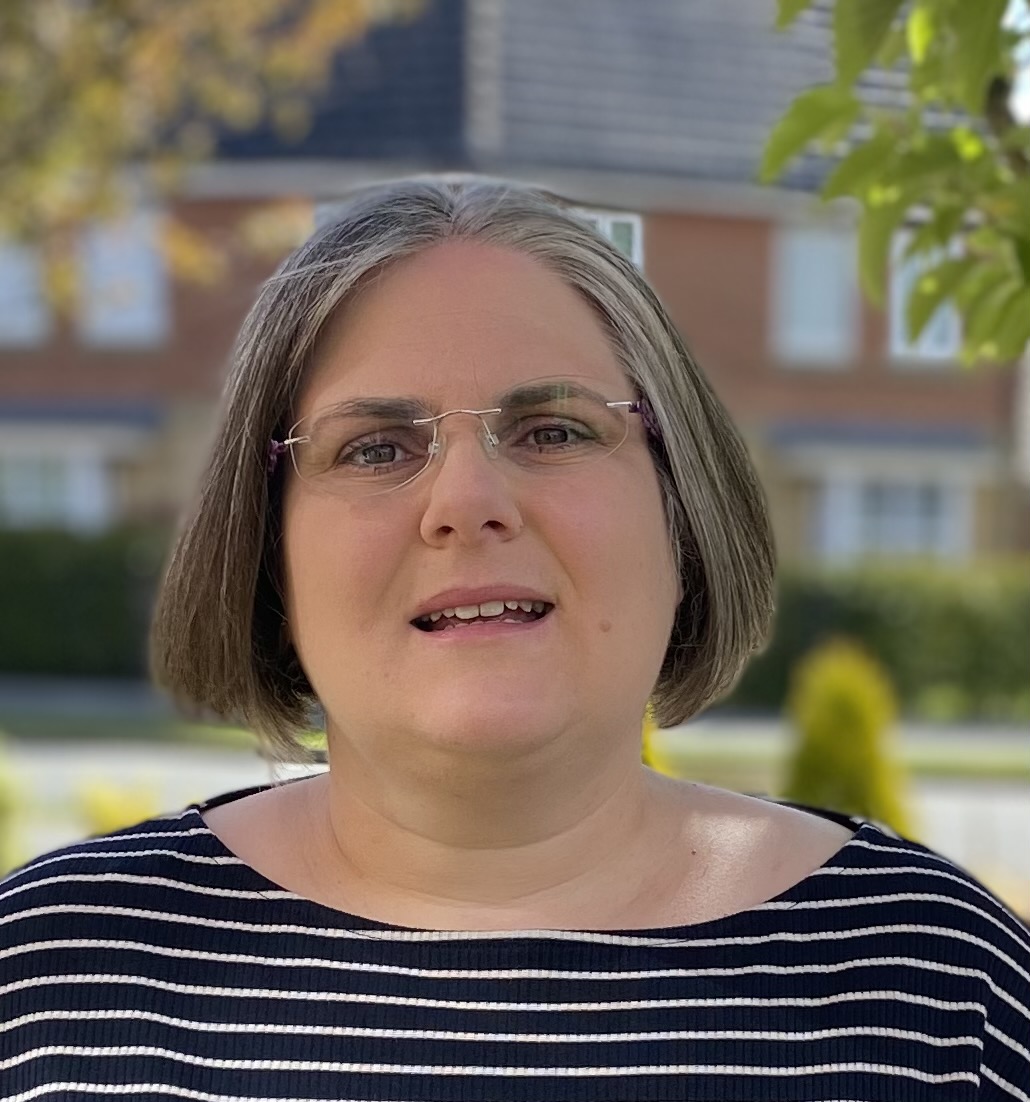
Michelle Banner

Michelle Banner

Principal Project Controls Trainer at Project Controls Solutions

Michelle Banner Project Controls Solutions (Global) Ltd Principal Project Controls Trainer, has more than 20 years experience in the infrastructure, nuclear, utilities, and various other industries. She is recognized as a technical expert in her specialism of Planning and Risk along with having a substantial background in cost and estimating. She is experienced in delivering EPC, R&D and Engineering contracts for infrastructure, utilities and nuclear. She is experienced in all aspects of project delivery from bidding through to commissioning and close out. As a recognized expert, Michelle has written and delivered training both internally and for external clients on topics such as Earned Value Management, Schedule Management and Resource Management. She has also had a leading involvement in the development of end point assessment material for TASC (assessing Project Controls competence up to degree level).

Connect
Johnny Shepherd

Johnny Shepherd

Project Controls Professional at Jacobs

Johnny has developed a passion for project controls since embarking on the apprenticeship programme in 2014. Jonathan has a particular speciality in project planning and has recently been promoted to a senior role at an early stage of his career. Throughout his career, Johnny has made a conscious effort to develop a rounded skill set within project controls as he has ambitions to take a leading role in the future. He has recently embarked on the BSc (Hons) Project Controls Professional Degree Apprenticeship, the first of its kind in the UK. In doing so, Johnny aims to develop on his critical thinking skills and to begin supporting his projects & programmes in a more strategic way.

Connect

Related Episodes

More conversations on similar topics

S7E153

S7E153: AI in Project Controls: Separating Fact from Fiction with Alan Mosca

In this week’s pod, we welcomed back Alan Mosca to discuss AI in Project Controls – Separating fact from fiction. Alan is the co-founder and CTO of nPlan, where he leads technology, research, and product, whilst developing thought leadership about forecasting and risk. Before nPlan, Alan spent 7 years as a technologist in quantitative finance, on live trading systems, research, and front-office in both high-frequency trading and asset management. Alan has extensive experience in algorithm design and software engineering and holds a BEng in Computer Engineering, MSc in Computer Science, and doctoral research in machine learning theory. The main topics we discussed on the podcast were as follows: There needs to be a lot of responsibility with using data from AI toolsets Toolsets are available that can auto-plan a successor activity in a schedule based on previous data Large language models only work based on language. Chat GPT took longer to reach the mainstream because of the data checks to ensure outputs were not inappropriate AI will not replace humans on projects. It will only evolve their current roles In the next 3-5 years we will see models that can internalize the meaning of a project AI could be used to measure schedule compliance with the contract Models can’t self-regulate which can lead to biases in data. We’re past the point of having a common data environment Create better things not faster things! Simulation is harder than AI because it requires a greater level of precision One person’s experience is another person’s bias One of the main fictions of AI is that everything will be possible. It will never predict the future, it will only forecast possible outcomes Be a critic! AI outputs are not infallible Here are links to some of the topics we discussed: David Chalmers – Are Large Language Models Sentient? https://www.youtube.com/watch?v=-BcuCmf00_Y Join us next time when we’re re-joined by Christine McLean to discuss EQ, IQ, and MQ: Unlocking the Power of Softer Skills For more information, blogs or to support our charities visit www.projectchatterpodcast.com If you'd like to sponsor the podcast get in touch via our website. You can also leave us a voice message via our anchor page and let us know if there's something or someone specific that you would like on the podcast. Proudly sponsored by: https://ineight.com/ Stay safe, be disruptive and have fun doing it!

Listen Now
S6E150

S6E150: Project Controls in Design & Engineering stages with Paul Waskett

In this week’s pod, we were joined by Paul Waskett to discuss Project Controls in design and engineering stages. Paul is a Director of Adept Management where he takes responsibility for the development of their Project Controls tools and services, as well as supporting clients and projects across the construction industry. Since 2014, Paul has been supporting two major rail projects. He is a Mechanical Engineer by background and has over 20 years’ experience in Design Management and Project Controls. In addition, Paul has spent time working in central government, where he managed a construction innovation budget, and as a researcher where he developed some of Adept Management's innovative approaches to design planning and management.  The main topics we discussed on the podcast were as follows: There is generally more scrutiny on the construction part of a design and build contract however both need equal attention in order to manage projects effectively Design planning is not as linear as other types of programmes. There are generally more interdependencies and iterations of designs Build a WBS and identify relevant activities and inputs before starting the planning process As the project is delivered, the Last Planner System can be used to monitor progress Using % complete to measure design progress can be difficult to implement consistently Working from home has made it more difficult to promote communication and problem solving in major projects as the relevant stakeholders are not collaborating as often as they would in an office based environment Earned Value Management only works when rules of credit are in place and all stakeholders are aware of the limitations of it being the sole measure of progress Digital twin can help engineers to assess the effect of what may seem like a small scale change on a design It is prudent to have a sole interface between engineering and project management in order to deliver a consistent message One of the key challenges for Engineering Managers is to get the “commitment” from the engineering team(s) to deliver to a specified date or budget Here are links to some of the topics we discussed: The Latham Report – Constructing The Team: https://constructingexcellence.org.uk/wp-content/uploads/2014/10/Constructing-the-team-The-Latham-Report.pdf Adept Management: https://www.adeptmanagement.com/ Last Planner System: https://leanconstructionblog.com/What-is-the-Last-Planner-System.html Join us next week when we speak to Tony Welch to discuss five levers for change. For more information, blogs or to support our charities visit www.projectchatterpodcast.com If you'd like to sponsor the podcast get in touch via our website.You can also leave us a voice message via our anchor page and let us know if there's something or someone specific that you would like on the podcast. Proudly sponsored by: https://www.justdo.com/ https://ineight.com/ Stay safe, be disruptive and have fun doing it! #ProjectManagement #Engineering #PMO #ProjectControls #Leadership #Culture

Listen Now
S9E205

S9E205: Replicability of the Montreal REM Model with Riccardo Cosentino

In this episode of the Project Chatter podcast, hosts Val and Dale engage with Riccardo Cosentino to explore the unique aspects of the REM project in Canada, a public-private partnership (PPP) model that has garnered attention for its innovative funding and governance structure. Riccardo shares insights into the project's background, the role of the Quebec pension fund as a project sponsor, and the implications of risk management and return calculations. The conversation delves into the importance of early stakeholder involvement, the challenges of public opinion, and the potential for replicating this model in other sectors. Throughout the discussion, the significance of governance, long-term perspectives, and the necessary skill sets for project professionals are emphasized, providing valuable takeaways for listeners interested in infrastructure projects and PPPs. Takeaways The REM project is a unique public-private partnership model. Risk management is crucial in financing infrastructure projects. The obligation to repay investments can shift from taxpayers to private entities. Calculating returns involves considering ridership and land value capture. Contingency planning is integrated into the rate of return. Early involvement of stakeholders leads to better project outcomes. Governance structures can significantly impact project success. Long-term perspectives are essential for managing infrastructure investments. Curiosity and risk-taking are important traits for project professionals. The REM model could be applied to other sectors beyond transportation. Chapters 00:00 Introduction and Guest Background 03:24 Understanding Public-Private Partnerships (PPPs) 06:11 The REM Project Overview 08:56 Funding and Risk Management in the REM Project 11:55 Calculating Returns and Land Value Capture 14:33 Governance and Project Delivery 17:21 Long-Term Perspectives and Lifecycle Management 22:47 Changing Dynamics in Project Management 24:35 Governance and Change Management in Projects 26:38 Replicating Successful Project Models 29:08 Applying the Model Beyond Rail Projects 31:07 Reporting Mechanisms and Governance Structures 33:55 Skill Sets for Successful Project Delivery 35:39 Advice for Aspiring Project Professionals 37:27 Resilience in Today's Project Challenges 39:40 Future of the CDPQ Model and Its Replicability

Listen Now

Enjoyed this episode?

Subscribe to never miss a conversation with project experts