S4E801 August 2021

S4E80: The Positive Project Manager, Lean & Six Sigma with Kasper Dixon

S4E80

S4E80: The Positive Project Manager, Lean & Six Sigma with Kasper Dixon

0:000:00
100%

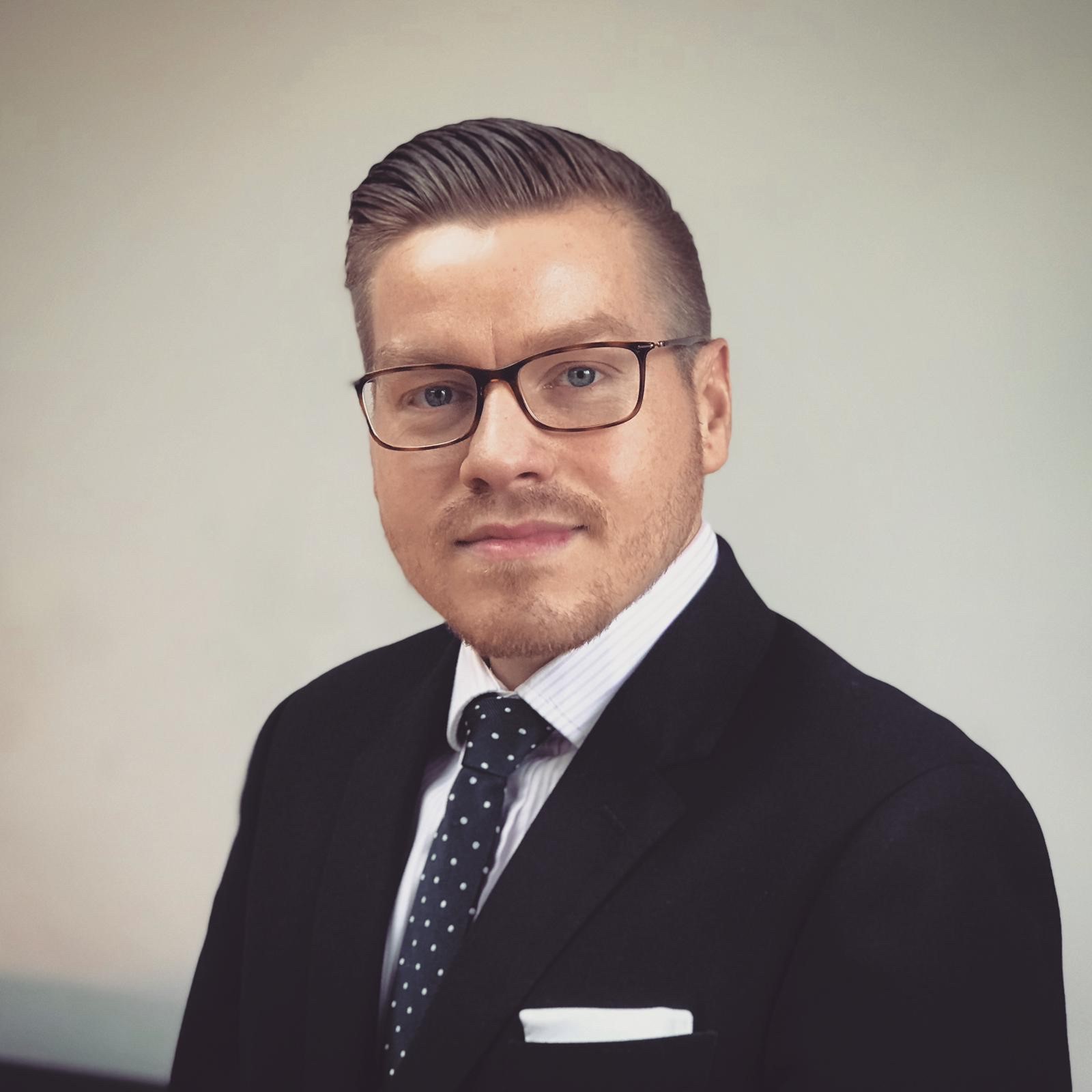
This episode is proudly brought to you by PlanAcademy.com, JustDo.com, and InEight.com. In this week’s pod, we were supposed to speak to Dr. Dan Patterson but unfortunately, he is unwell. In his place, we welcomed Kasper Dixon to talk about positive Project Management, Lean and Six Sigma Kasper is a Programme Delivery Manager working for the Major Projects Directorate within Transport for London on the £5.6 billion Four Lines Modernisation Project. He is a Lean Six Sigma Black Belt trainer and is passionate about leading through example with positivity and encouragement. The main topics discussed: · There are many high performing projects that do not get the same level of management focus or recognition as failing projects · Positivity is something to focus on in personal lives not just in the workplace · Empathy is critical for leaders. Always try to understand the frustrations of stakeholders who are not onside immediately · Turn the saboteurs into advocates by being authentic and working tirelessly to reach the desired goals · Leadership perception has fundamentally changed over the last 30-40 years. Less stick, more carrot! · People simply do not respond to the stick. They want encouragement to achieve their goals · Leaders need to stop, look back and celebrate success when critical milestones are achieved · Tips for difficult conversations: Having the conversation is often the answer. Never avoid issues Identify why there is an issue Don’t be overly optimistic, talk about the issues and reflect on it · Six Sigma provides a structure for people to see a task from start to finish. It provides a structure for people · Unfortunately, there are no actual belts for achieving Six Sigma! · Six Sigma is applicable to every project and every function. · Construction industry is slow to embrace this, does not gain the right level of focus · Six Sigma training is available online. It is not essential to undertake in-person training. It does help to talk and work through the concepts with other collaborators · It will make you a more marketable employee · VANVA – Value Add / Non-Value Add · Always ask the 5 Why’s when reviewing a process. (it really is five why’s!) · Post-it notes are the best process mapping tool! · Always challenge words that begin with “re” – they are more likely to be processes that are wasteful Some of the topics that were discussed: 5 Laws of Lean Six Sigma - https://www.shmula.com/understanding-the-5-laws-of-lean-six-sigma/26626/ Minitab – Statistical process tool - https://www.minitab.com/en-us/ Miro – Online whiteboard - https://miro.com/ ----------------------------------------- Join us next week where we’re joined by Tim Creasey for a deep dive into Change Management & Project Management. For more information, blogs or to support our charities visit www.projectchatterpodcast.com If you'd like to sponsor the podcast get in touch via our website. You can also leave us a voice message via our anchor page and let us know if there's something or someone specific that you would like on the podcast. Stay safe, be disruptive and have fun doing it!

Guest

Kasper Dixon

Kasper Dixon

Programme Delivery Manager at Transport for London

Kasper is currently a Programme Delivery Manager working for the Major Projects Directorate within TfL on the £5.6billion Four Lines Modernisation Project. He is a Lean Six Sigma Black Belt and is passionate about leading through example with positivity and encouragement.

Connect

Related Episodes

More conversations on similar topics

S9E205

S9E205: Replicability of the Montreal REM Model with Riccardo Cosentino

In this episode of the Project Chatter podcast, hosts Val and Dale engage with Riccardo Cosentino to explore the unique aspects of the REM project in Canada, a public-private partnership (PPP) model that has garnered attention for its innovative funding and governance structure. Riccardo shares insights into the project's background, the role of the Quebec pension fund as a project sponsor, and the implications of risk management and return calculations. The conversation delves into the importance of early stakeholder involvement, the challenges of public opinion, and the potential for replicating this model in other sectors. Throughout the discussion, the significance of governance, long-term perspectives, and the necessary skill sets for project professionals are emphasized, providing valuable takeaways for listeners interested in infrastructure projects and PPPs. Takeaways The REM project is a unique public-private partnership model. Risk management is crucial in financing infrastructure projects. The obligation to repay investments can shift from taxpayers to private entities. Calculating returns involves considering ridership and land value capture. Contingency planning is integrated into the rate of return. Early involvement of stakeholders leads to better project outcomes. Governance structures can significantly impact project success. Long-term perspectives are essential for managing infrastructure investments. Curiosity and risk-taking are important traits for project professionals. The REM model could be applied to other sectors beyond transportation. Chapters 00:00 Introduction and Guest Background 03:24 Understanding Public-Private Partnerships (PPPs) 06:11 The REM Project Overview 08:56 Funding and Risk Management in the REM Project 11:55 Calculating Returns and Land Value Capture 14:33 Governance and Project Delivery 17:21 Long-Term Perspectives and Lifecycle Management 22:47 Changing Dynamics in Project Management 24:35 Governance and Change Management in Projects 26:38 Replicating Successful Project Models 29:08 Applying the Model Beyond Rail Projects 31:07 Reporting Mechanisms and Governance Structures 33:55 Skill Sets for Successful Project Delivery 35:39 Advice for Aspiring Project Professionals 37:27 Resilience in Today's Project Challenges 39:40 Future of the CDPQ Model and Its Replicability

Listen Now
S6E150

S6E150: Project Controls in Design & Engineering stages with Paul Waskett

In this week’s pod, we were joined by Paul Waskett to discuss Project Controls in design and engineering stages. Paul is a Director of Adept Management where he takes responsibility for the development of their Project Controls tools and services, as well as supporting clients and projects across the construction industry. Since 2014, Paul has been supporting two major rail projects. He is a Mechanical Engineer by background and has over 20 years’ experience in Design Management and Project Controls. In addition, Paul has spent time working in central government, where he managed a construction innovation budget, and as a researcher where he developed some of Adept Management's innovative approaches to design planning and management.  The main topics we discussed on the podcast were as follows: There is generally more scrutiny on the construction part of a design and build contract however both need equal attention in order to manage projects effectively Design planning is not as linear as other types of programmes. There are generally more interdependencies and iterations of designs Build a WBS and identify relevant activities and inputs before starting the planning process As the project is delivered, the Last Planner System can be used to monitor progress Using % complete to measure design progress can be difficult to implement consistently Working from home has made it more difficult to promote communication and problem solving in major projects as the relevant stakeholders are not collaborating as often as they would in an office based environment Earned Value Management only works when rules of credit are in place and all stakeholders are aware of the limitations of it being the sole measure of progress Digital twin can help engineers to assess the effect of what may seem like a small scale change on a design It is prudent to have a sole interface between engineering and project management in order to deliver a consistent message One of the key challenges for Engineering Managers is to get the “commitment” from the engineering team(s) to deliver to a specified date or budget Here are links to some of the topics we discussed: The Latham Report – Constructing The Team: https://constructingexcellence.org.uk/wp-content/uploads/2014/10/Constructing-the-team-The-Latham-Report.pdf Adept Management: https://www.adeptmanagement.com/ Last Planner System: https://leanconstructionblog.com/What-is-the-Last-Planner-System.html Join us next week when we speak to Tony Welch to discuss five levers for change. For more information, blogs or to support our charities visit www.projectchatterpodcast.com If you'd like to sponsor the podcast get in touch via our website.You can also leave us a voice message via our anchor page and let us know if there's something or someone specific that you would like on the podcast. Proudly sponsored by: https://www.justdo.com/ https://ineight.com/ Stay safe, be disruptive and have fun doing it! #ProjectManagement #Engineering #PMO #ProjectControls #Leadership #Culture

Listen Now
S5E112

S5E112: Project forecasting is a "wicked problem" with Dr Dan Patterson

In this episode, Dale and Val bring back Dr Dan Patterson to talk about what he has been brewing since their last podcast. Wicked’ problems are problems that cannot be definitely solved – they can only be bettered. Tame problems can be definitively solved e.g. fixing a leaky pipe.  For 70 years, we have been trying to adopt tools to definitively ‘solve’ projects and as such we all too often run into what we think is ‘project failure’. The problem with a project is that there is no definitive ‘this is solved’ – there are too many competing objectives (eg cost vs schedule vs cope) and also too many stakeholders with differing objectives. Instead of striving for a finite outcome, in the context of the fact projects are under a barrage of constant change and influences, perhaps we should treat planning and execution as being bettered (tamed) and not solved? I see this as the science of meta-planning ie better plan the planning process rather than jumping into planning execution itself.  Tame problems can be solved. Wicked problems can only be tamed and that is what meta-planning is all about. Dr. Dan Patterson is a Schedule and Cost Risk Analysis thought leader. He was the CEO and founder of BASIS, a project management company specializing in schedule and risk analytics, which was acquired in 2018 by InEight, Inc. Prior to BASIS, Dan led the highly successful organization Acumen, a project analytics company, and is the inventor of Acumen Fuse, Risk and 360, a project analytics software suite that is used for project planning quality improvement, performance insight, and forensics analysis. Dr. Patterson conducts risk workshops for billion-dollar projects and has subsequently served as an expert witness on many. During the execution of these engagements he leads qualitative and quantitative risk analysis, prepares and presents executive summaries, and leads in-person executive briefings to company executives. Dr. Patterson acts as the primary lead on various company and project internal risk optimization procedures. He specializes in risk workshops, project audits, and strategic project analysis on various capital expenditure projects. With over 20 years of professional experience, Dr. Patterson is recognized as a global thought leader and visionary within the project management industry. Specifically, he is known for his risk and schedule analytics expertise and is frequently utilized on high-profile capital expenditure projects for workshop facilitation, expert witness testimony, advanced analytics, and board-level briefings. Dr. Patterson has an impressive track record with extensive commercial and technical project management experience on projects that in the aggregate are valued at over $200 billion. Today, Patterson continues to push the project management boundaries forward with InEight BASIS, the first AI planning tool for CAPEX projects. Prior to BASIS, Patterson was the founder and CEO of Acumen, and inventor of Acumen Fuse, Risk and 360, a widely-used project metrics analysis and risk management software suite. Acumen was acquired by Deltek in 2013 with the Acumen toolset now used on most major CAPEX projects worldwide. Prior to Acumen, Patterson founded Pertmaster NA. He brought project risk analysis to the masses with the introduction of an integrated Monte Carlo analysis and risk register solution. This led to the successful acquisition of Pertmaster by Primavera (now Oracle) in 2006. Proudly sponsored by: Prosci.com InEight.com PlanAcademy.com JustDo.com  #ProjectManagement #ProjectDelivery #ProjectControls

Listen Now

Enjoyed this episode?

Subscribe to never miss a conversation with project experts