S8E1965 January 2025

S8E196: Contract Alliances - what does it really mean with Ian Quick

S8E196

S8E196: Contract Alliances - what does it really mean with Ian Quick

0:000:00
100%

This episode is proudly sponsored by Deltek. In this episode of the Project Chatter podcast, Dale speaks with Ian Quick about his extensive journey in project management, particularly focusing on the concept of alliancing. Ian shares his experiences transitioning from engineering to project management, the importance of collaboration and culture in successful alliances, and the role of leadership in fostering an environment of trust and empowerment. The conversation delves into the challenges and benefits of alliancing, emphasising the need for vulnerability, accountability, and diverse thinking in leadership. Ian reflects on his personal growth and the lasting relationships formed through collaborative projects, ultimately advocating for a shift in the construction industry towards more effective and sustainable practices.

Guest

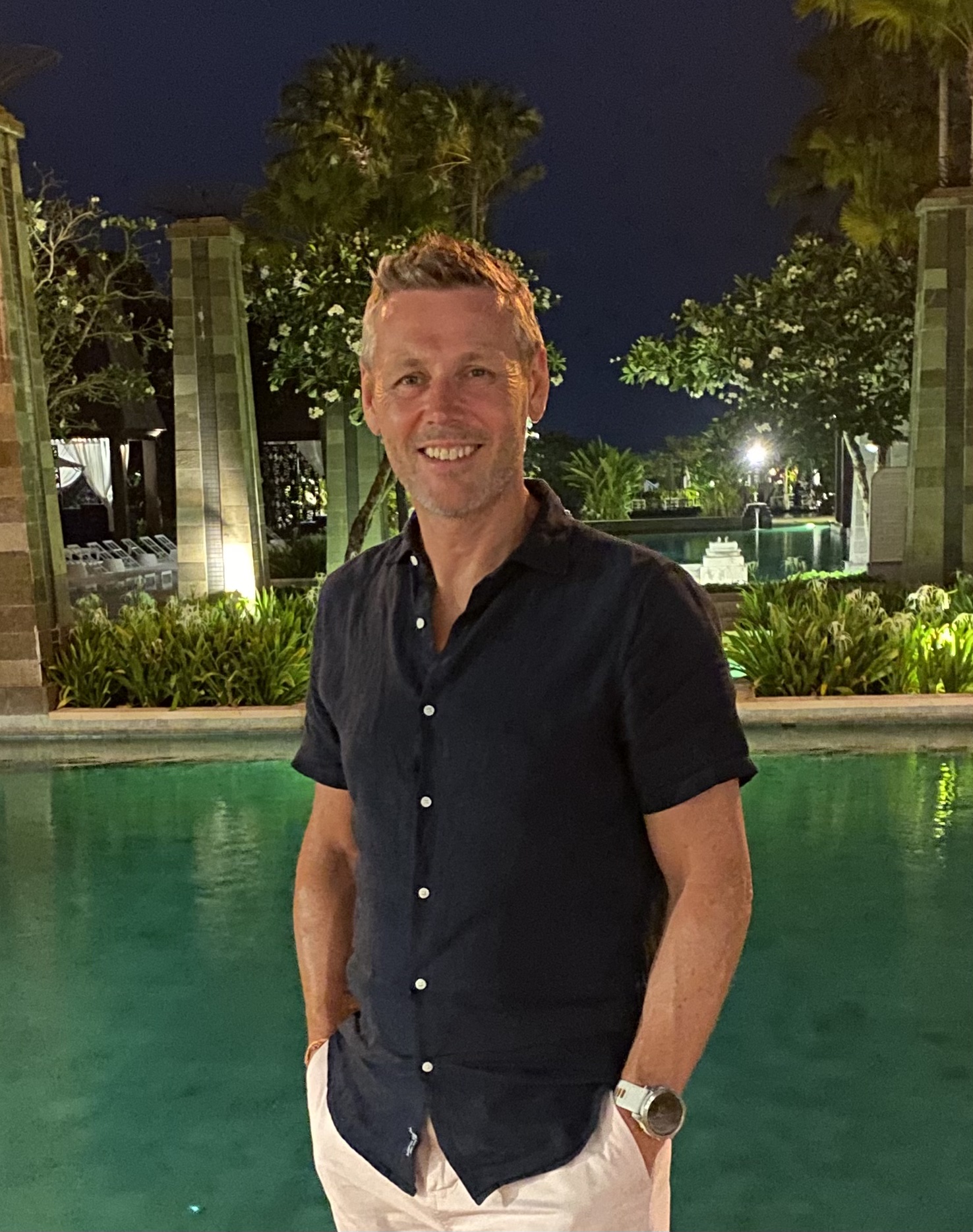
Ian Quick

Ian Quick

Director at Wharfe Griffin Consulting and Advisory Services

Ian has over 25 years of experience as a senior leader delivering major projects in the rail industry. He was responsible for developing multiple alliances for Network Rail, specifically on the GNGE programme, East Coast Power Supply Upgrade and latterly, both delivery alliances on the Transpennine Route Upgrade programme. Ian was also responsible for be early development and definition of the Transpennine Route upgrade. Taking the programme through the early approvals and developing the current Enterprise approach. Ian is now working for himself consulting with a focus on developing collaborative operating models on major programmes, collaboration training and undertaking independent assurance reviews.

Connect

Related Episodes

More conversations on similar topics

S6E134

S6E134: Does AI & Machine Learning really make a difference with Alan Mosca

In this week’s pod, we welcomed Alan Mosca to discuss whether machine learning and AI can really make a difference.Alan is the co-founder and CTO of nPlan, where he leads technology, research, and product, whilst developing thought leadership about forecasting and risk. Before nPlan, Alan spent 7 years as a technologist in quantitative finance, on live trading systems, research, and front-office in both high-frequency trading and asset management.Alan has extensive experience in algorithm design and software engineering and holds a BEng in Computer Engineering, MSc in Computer Science, and doctoral research in machine learning theory. The main topics we discussed on the podcast were as follows: Machine Learning (ML) is a sub-branch of AI although the terms are often used interchangeablyML is useful for spotting really complex patternsWhen approaching major projects, machine learning aims to capture the data and experienceThe aim is to make the data simple enough for business leaders to understandAutomation will rescue some project information by providing consistency on transactional actionsThe key to understanding how to make good decisions is to understand the process they are going through to make it (see double diamond process)“Go to their bus stop”!Machine Learning can not and will not fix cultural issues within projects and organisationsML/IA will not replace humans on projects, it can only be used to inform decision makers to improve performanceCritical Path Methodology was great when tools were not available to do multiple scenarios on activitiesUse the current version of the future to make the next version of the future betterCould projects start using a decision log and track the inputs used to inform the decisions? Here are links to some of the topics we discussed:·        Double Diamond Decision Process: https://www.designcouncil.org.uk/our-work/news-opinion/double-diamond-universally-accepted-depiction-design-process/·        Buyer Decision Process: https://www.iedunote.com/buyer-decision-process·        Cognitive Biases: https://thedecisionlab.com/biases·        Superforecasting: The Art and Science of Prediction Phillip Tetlock, Dan Gardner: https://www.amazon.co.uk/Superforecasting-Science-Prediction-Philip-Tetlock/dp/1847947158/ref=asc_df_1847947158/?tag=googshopuk-21&linkCode=df0&hvadid=310805565966&hvpos=&hvnetw=g&hvrand=12494366783115682348&hvpone=&hvptwo=&hvqmt=&hvdev=c&hvdvcmdl=&hvlocint=&hvlocphy=9045901&hvtargid=pla-454864998863&psc=1&th=1&psc=1·        nPlan Experimental Research Department:

Listen Now
S9E208

S9E208: Blockchain and Carbon: The Future of Project Management with Kevin O'Grady

In this episode of the Project Chatter podcast, Val and Dale welcome Kevin O'Grady, a director at Cognitive, who shares his extensive experience in project management, particularly in the built environment. The conversation delves into the practical applications of blockchain technology in construction, the importance of carbon tracking, and the emerging role of sustainable aviation fuel. Kevin provides insights into how these technologies can enhance project delivery and efficiency, while also discussing the challenges and opportunities they present. The episode emphasizes the need for transparency and collaboration in the industry, as well as the importance of measuring and improving carbon emissions. Takeaways Kevin O'Grady has a diverse background in project management and engineering. Blockchain can enhance transparency and trust in project delivery. Carbon tracking is essential for sustainable project management. Sustainable Aviation Fuel (SAF) is gaining traction but faces infrastructure challenges. AI can play a significant role in tracking project progress and carbon emissions. Collaboration among stakeholders is crucial for successful project outcomes. The construction industry needs to adapt to new technologies for better efficiency. Measuring carbon emissions is vital for improving sustainability in projects. Project wallets could revolutionize payment transparency in construction. Innovation in the industry is driven by the need for better practices and technologies. Chapters 04:24 Kevin O'Grady's Journey in Project Management 07:33 Transitioning from Engineering to Commercial Management 09:21 Technological Innovations in Project Management 13:12 The Role of Digital Twins in Project Delivery 17:20 Understanding Blockchain Technology 20:58 Blockchain Applications in Construction 27:43 Exploring Real-World Use Cases for Blockchain 30:23 Tokenization in Construction Payments 32:03 Linking Progress and Blockchain 34:54 Smart Contracts and Payment Automation 36:51 Challenges in Implementing Blockchain 39:42 The Role of Profit Margins in Construction 43:03 Carbon Measurement and Blockchain 43:32 Sustainable Aviation Fuel and Its Challenges

Listen Now
S9E205

S9E205: Replicability of the Montreal REM Model with Riccardo Cosentino

In this episode of the Project Chatter podcast, hosts Val and Dale engage with Riccardo Cosentino to explore the unique aspects of the REM project in Canada, a public-private partnership (PPP) model that has garnered attention for its innovative funding and governance structure. Riccardo shares insights into the project's background, the role of the Quebec pension fund as a project sponsor, and the implications of risk management and return calculations. The conversation delves into the importance of early stakeholder involvement, the challenges of public opinion, and the potential for replicating this model in other sectors. Throughout the discussion, the significance of governance, long-term perspectives, and the necessary skill sets for project professionals are emphasized, providing valuable takeaways for listeners interested in infrastructure projects and PPPs. Takeaways The REM project is a unique public-private partnership model. Risk management is crucial in financing infrastructure projects. The obligation to repay investments can shift from taxpayers to private entities. Calculating returns involves considering ridership and land value capture. Contingency planning is integrated into the rate of return. Early involvement of stakeholders leads to better project outcomes. Governance structures can significantly impact project success. Long-term perspectives are essential for managing infrastructure investments. Curiosity and risk-taking are important traits for project professionals. The REM model could be applied to other sectors beyond transportation. Chapters 00:00 Introduction and Guest Background 03:24 Understanding Public-Private Partnerships (PPPs) 06:11 The REM Project Overview 08:56 Funding and Risk Management in the REM Project 11:55 Calculating Returns and Land Value Capture 14:33 Governance and Project Delivery 17:21 Long-Term Perspectives and Lifecycle Management 22:47 Changing Dynamics in Project Management 24:35 Governance and Change Management in Projects 26:38 Replicating Successful Project Models 29:08 Applying the Model Beyond Rail Projects 31:07 Reporting Mechanisms and Governance Structures 33:55 Skill Sets for Successful Project Delivery 35:39 Advice for Aspiring Project Professionals 37:27 Resilience in Today's Project Challenges 39:40 Future of the CDPQ Model and Its Replicability

Listen Now

Enjoyed this episode?

Subscribe to never miss a conversation with project experts